
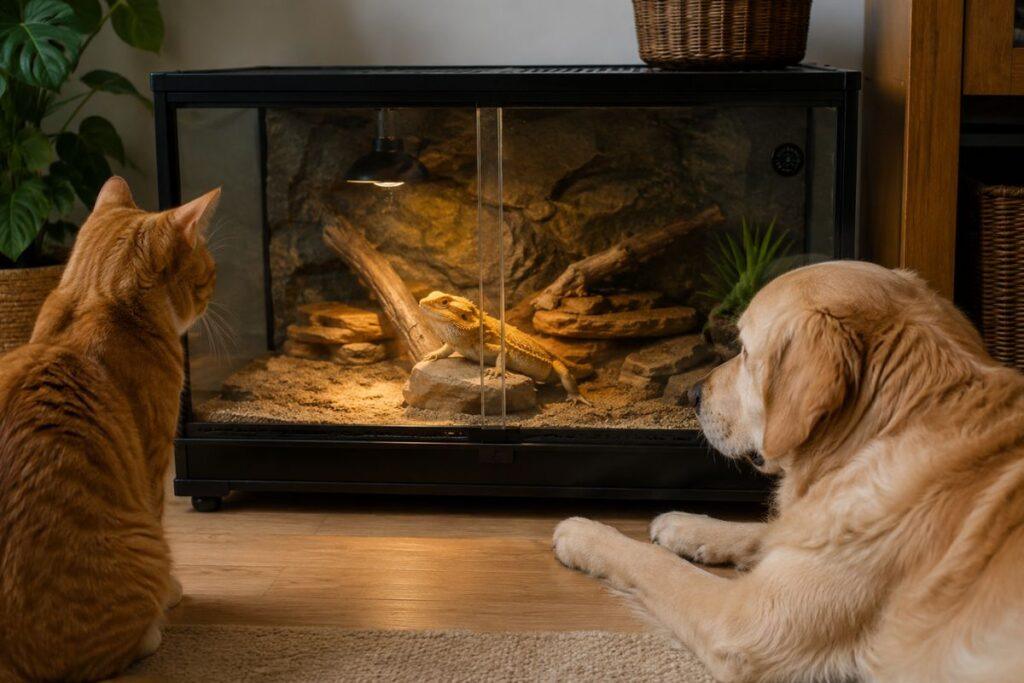
A reptile setup can look calm until the rest of the house gets involved. The lamp is on. The lizard has found its warm spot. Nothing dramatic is happening.
Then a cat appears on the sideboard. Or the dog hears one tiny scrape inside the cabinet and comes over, nose first, to investigate. That is the part new keepers sometimes underestimate. In a home with cats or dogs, the vivarium is not just a place to keep a reptile. It is a barrier between very different animal instincts.
Why Cats And Dogs Change The Setup
Cats usually go up before they go close. Shelves, chair backs, window ledges, the top of a cabinet. If there is a route, they will probably find it. Dogs are more direct. They sniff around the base, lean into furniture, bark at movement or stand too close because something inside has caught their attention.
The problem is that the reptile inside may not read it as harmless. A gecko facing a cat’s stare for half an hour is not sharing a cute moment. A lizard hearing a dog bark near the vivarium every evening may stay on alert even if the doors never open.
So the setup has to be practical before it is pretty. It has to stay steady. It has to close properly. It has to keep heat, light and airflow where they belong, without turning the enclosure into the most interesting object in the room.
The Enclosure Has To Feel Secure Before It Looks Good
A neat setup is lovely. A safe one matters more.
The vivarium needs a solid base, not a narrow shelf that moves when someone brushes past. Doors should close without catching. Vents should stay clear. Cables should not hang where a dog can chew them or where a cat can hook them with a paw during one of those strange midnight inspections cats seem to enjoy.
In homes where cats or dogs can reach the setup, Lizard enclosures make more sense when they have secure front doors, clear ventilation, steady heat zones and a wipe clean PVC build that feels solid in a busy room.
A PVC vivarium can work for keepers who need something lighter than a heavy glass setup, easy to wipe down and tidy enough for a living room or bedroom.
Where To Put A Vivarium In A Busy Pet Home
Start by looking at the room from the cat’s point of view. Is there a bookcase nearby? A sofa arm? A windowsill? A side table that turns into a launch pad? If the answer is yes, the enclosure may become interesting sooner or later. Usually later, when everyone has relaxed.
Dogs create a different problem. A hallway may look convenient until the dog charges past every time the doorbell goes. A quieter corner often works better, as long as the reptile still gets the right heat, light and airflow.
Height helps, but only when the stand is steady. Too low, and the dog gets constant access. Too high, and cleaning turns into a job you start avoiding. The sweet spot is boring but useful. Reachable for the keeper, calm for the reptile and awkward for other pets to bother.
Also, avoid putting reptile enclosures beside a dog bed or cat feeding spot. Those places already belong to another animal in the household map. Add a lizard there, and the tension can start quietly.
Heat And Light Still Need Careful Control
Reptiles need their own conditions. That sounds obvious, but it gets messy in a real room with sofas, pet beds, blankets and animals that move things without asking.
Heat, UV lighting, cooler areas and humidity need to be set for the species, not for whatever looked good in a photo online. A bearded dragon, leopard gecko and crested gecko do not run on the same rules. Same house. Different setup.
Cats can complicate things by sitting on warm surfaces. Dogs can knock plugs, chew cables, or push beds against units. Cable management is dull. Truly. Then one loose wire turns into the most important detail in the room.
Keep wires out of reach. Check thermostats. Look at whether heat sources are being blocked by furniture, blankets or pet beds that have slowly drifted across the floor. It happens.
A PVC vivarium may help conditions feel steadier than a draughty setup, but it does not remove the need for checks. The keeper still has to monitor temperature, humidity and ventilation. Guesswork is not care.
Cleaning Matters More When There Are Several Pets
A house with cats, dogs and reptiles already has enough to manage. Fur on the sofa. The litter tray smells. Food bowls. Muddy paws by the door. Add a reptile enclosure, and the cleaning routine needs to be simple enough to repeat, not perfect enough to abandon.
Smooth surfaces help because waste, shed skin and water marks are easier to spot. Door tracks need attention too. So do hides, bowls, ledges and the little corners where substrate collects because it always finds a way.
Keep reptile cleaning tools away from cat and dog items. Different clothes. Different bowls. Different storage spot. It feels fussy for about a week. Then it just becomes easier because nobody has to remember which sponge touched what.
Hand washing matters as well. After handling the reptile, its food, its water bowl or anything inside the enclosure, wash hands properly. Reptiles can carry germs even when they look healthy, so hygiene belongs in the routine, especially in homes where children also stroke the dog, feed the cat or help with cleaning.
Signs Your Cat Or Dog Is Too Interested
Some interest is normal at first. New smell. New movement. New warm box in the room. Of course the other pets notice.
Fixed attention is different. A cat sitting frozen in front of the vivarium every evening is not just keeping the lizard company. It is watching. A dog that keeps whining, pawing or returning to the same corner may be too worked up by the movement inside.
The doors may stay closed, and the reptile can still feel the pressure.
Small changes often help. Move the vivarium higher. Add a visual barrier to one side. Shift the dog bed. Close the room during feeding. Give the cat another perch that is not pointed straight at the enclosure.
Sometimes that is enough. Not always. If the interest keeps building, separation is safer. No drama. Just a better arrangement. A reptile should not become daily screen time for another pet.
Buying With The Whole Household In Mind
Before buying, measure more than the reptile. Measure the room. Measure the stand. Check the doorways. Look at where the cat jumps from. Notice the route the dog takes when someone knocks at the door.
The right size depends on the species, age and adult needs of the reptile. A young animal may look fine in a smaller setup for a while, but that does not mean the enclosure will still work later. Hides, heat gradients, water, usable floor space and cleaning access all need room.
Modular reptile enclosures can make sense in smaller UK homes because they keep the setup feeling planned instead of scattered. That helps when the same room already has a sofa, dog bed, cat tree, storage basket and all the usual things real homes collect.
Check the locks. Check the vents. Check how the doors open. Check whether the material can handle regular cleaning. Check whether replacement parts are easy to get. These details feel small at checkout. Six months later, they are the things you deal with every week.
A Safer Setup Makes The Whole Home Calmer
A reptile can live safely in a home with cats or dogs, but the enclosure has to do more than look tidy. It has to give the lizard steady conditions, keep curious paws away and make daily care simple enough to repeat.
Good housing does not remove every risk. Nothing does. It does remove the weak points that cause most trouble, from loose doors and poor placement to exposed cables, awkward cleaning and constant attention from other pets.
That is the value of choosing carefully. The reptile feels more protected, the cat or dog has fewer chances to get too involved, and the room stops feeling like a small accident waiting to happen. Calmer for everyone.