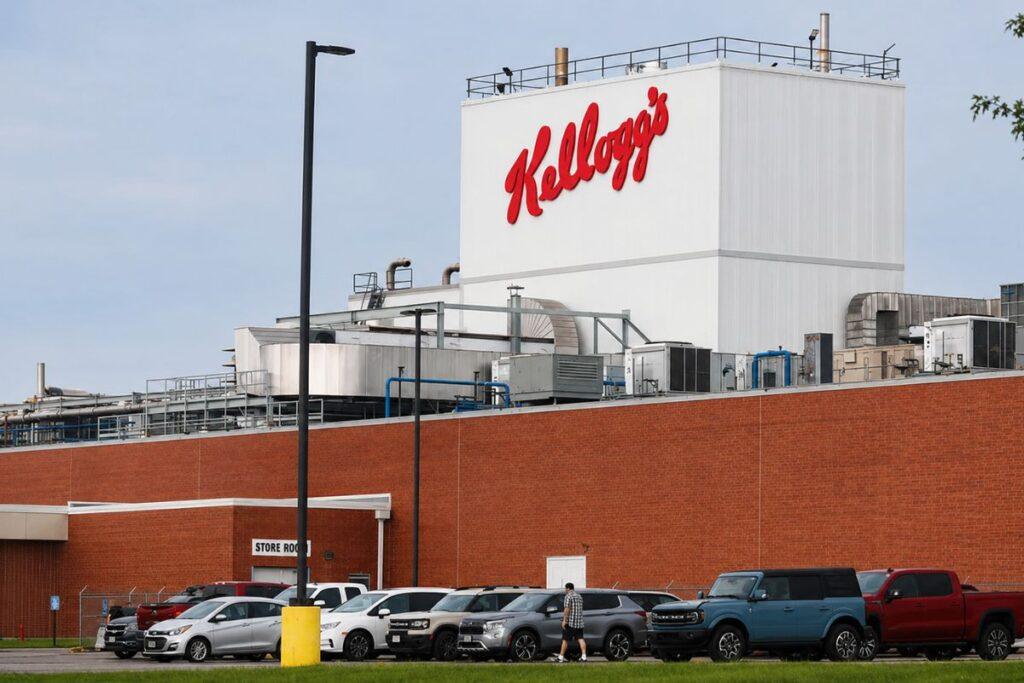
Kellogg’s has closed its cereal factory in Trafford Park, Manchester, after 88 years of production, with around 360 jobs lost. Production at the site officially ended on 3 September 2026, according to a PA newswire report, though the building itself will stay open until the end of 2026 while the closure is wound down. Cereal-making is moving to the company’s larger site in Wrexham, north Wales.
Here’s the full story — what happened, why it happened, and what it means for Manchester, for Kellogg’s staff, and for the wider cereal industry.
- What’s closing: Kellogg’s cereal factory in Trafford Park, Stretford, Greater Manchester
- When it opened: 24 May 1938 — Kellogg’s first factory in Britain (88 years old at closure)
- When production ended: 3 September 2026
- When the site fully closes: By the end of 2026
- Jobs affected: Around 360 roles
- Owner: Kellanova (the company formerly known as Kellogg Company), now owned by Mars, Incorporated
- Where production is moving: Kellanova’s factory in Wrexham, North Wales
- What was made there: Corn Flakes, Rice Krispies and Coco Pops, at up to one million boxes a day
Why is the Kellogg’s Manchester Factory Closing?
Kellogg’s has consistently given two main reasons, repeated by UK managing director Chris Silcock when the closure was confirmed: the factory’s outdated layout, and unused space in the building.
The Trafford Park plant was built in 1938 as a six-floor operation, with ingredients and part-finished cereal moving up and down between floors a design that made sense for 1930s engineering but is inefficient by modern packaging standards. Kellanova also said only around half of the building’s floor space was actually in use, and that the investment needed to modernise it wasn’t commercially worthwhile.
Kellanova first proposed the closure in February 2024 and confirmed it in May 2024, following roughly three months of formal consultation with trade unions Usdaw and Unite. At that stage, the company said the factory would run until “towards the end of 2026.
” In practice, production wound down slightly ahead of that: the final cereal came off the line on 3 September 2026, with the site itself staying open into the closing months of the year to finish decommissioning and support staff. The consultation ended with an enhanced redundancy package and a commitment to offer redeployment to any affected staff able and willing to relocate.
The Bigger Reason This Happened Now: the Mars Takeover
Most coverage of this closure treats it as a standalone Manchester story. It isn’t. The decision was made by Kellanova at the same time the company itself was in the process of being bought by Mars, Incorporated the confectionery giant behind Snickers, M&M’s and Skittles.
Mars agreed to acquire Kellanova in August 2024 for around $35.9 billion, one of the largest food-industry deals in years. The takeover needed 28 separate regulatory approvals worldwide; the FTC cleared it in June 2025, and the deal received its final sign-off from the European Commission in December 2025.
Kellanova’s own newsroom confirmed the acquisition officially completed on 11 December 2025. Kellanova’s Pringles, Cheez-It, Pop-Tarts and international Kellogg’s cereal brands are now folded into Mars’s snacking division, and Kellanova shares no longer trade on the New York Stock Exchange.
Chris Silcock, the Kellanova UK managing director who announced and oversaw the Manchester closure, stepped down from the role in March 2026, according to trade publication The Grocer, which reported his departure came after seven years at the business and followed the Mars takeover.
So while Mars didn’t order the Trafford Park closure, the factory shut its lines in the same window that its parent company was absorbed into a much larger one and its UK leadership changed a piece of context that’s been largely missing from reporting on the closure.
Why Wrexham and not Manchester?
Five months after confirming Manchester would close, Kellanova announced a roughly £75 million investment in its Wrexham factory its largest single investment in British cereal production in three decades. That money funded new packaging lines and upgrades to existing ones.
Wrexham is already the world’s largest Special K production site and also makes All-Bran, Bran Flakes and Fruit ‘n Fibre. It’s now taking on Corn Flakes and Crunchy Nut production as well, consolidating UK cereal-making into one modern facility instead of splitting it across an ageing plant and a newer one. UK cereal output isn’t disappearing — it’s being concentrated into the site better suited to modern manufacturing.
Also read: Why Are UK Stores Closed on Easter Sunday? Full List of Closures Explained
Is this Part of a Wider Cereal Industry Trend?
Yes. The Manchester closure sits inside a broader slowdown in cereal demand that’s affecting manufacturers on both sides of the Atlantic. In August 2024, WK Kellogg Co the separate American company handling North American cereal since Kellogg’s 2023 corporate split announced it would close its plant in Omaha, Nebraska, and scale back production in Memphis, Tennessee, citing softer demand as consumers shift toward protein bars, yoghurt and other faster breakfast options.
Cereal manufacturers on both sides of the Atlantic have spent the past two years closing older, larger factories in favour of fewer, more efficient ones and Trafford Park’s closure fits that pattern rather than standing apart from it.
What Happens to the 360 Workers?
Kellanova reached a formal agreement with Usdaw and Unite that includes an enhanced redundancy package, and says redeployment will be offered to staff who want it, where it can be practically accommodated. In reality, the nearest alternative Kellanova site is Wrexham, more than 70 miles from Trafford Park not a realistic daily commute for most affected staff.
Usdaw’s regional organiser described the original closure proposal as “devastating news” for a factory that had employed generations of the same local families since 1938.
What Happens to the Trafford Park Site Now?
Production has stopped, but the site remains open until the end of 2026 to complete the wind-down and support outplacement for staff.
Kellanova has said it will work with local partners to mark the factory’s legacy rather than simply shutting the doors Trafford Council has already opened an exhibition with the Trafford Local Studies & Archives Centre, built using items and memories contributed by current and former factory staff, to preserve the site’s place in the area’s industrial history.
Beyond that, no final decision on the site’s future use has been announced publicly. The 27-acre plot sits in an area of Trafford Park that has been steadily shifting from traditional manufacturing toward logistics, green-tech industry and mixed-use redevelopment, so a warehousing, EV-logistics or redevelopment scheme is a more likely next chapter than another single large factory.
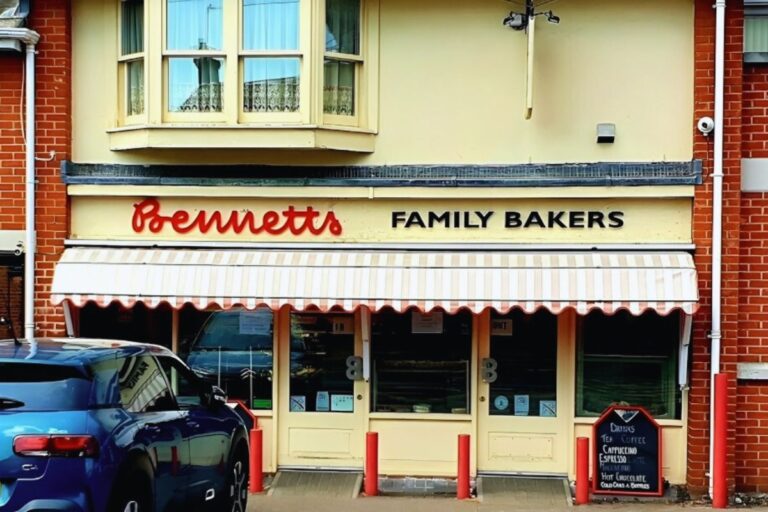
Also read: When the Ovens Go Cold: The Real Story Behind Bennetts Family Bakers Closure
Is Kellogg’s leaving the UK?
A. No. Kellogg’s cereal will continue to be made in the UK, at Wrexham. Kellanova’s MediaCity headquarters in Salford is unaffected, and the company says around 1,000 other UK jobs across its Wrexham and Salford sites are not impacted by the Manchester closure. Greater Manchester also remains Kellanova’s UK home, even though cereal is no longer produced there.
FAQ
Q. When did the Kellogg’s Trafford Park factory close?
A. Final production ended on 3 September 2026. The site itself will stay open until the end of 2026 to complete the wind-down.
Q. How many jobs were lost?
A. Around 360 roles were affected.
Q. Why is Kellogg’s closing the Manchester factory?
A. Kellanova cited the building’s outdated six-floor layout, which was inefficient for modern packaging, and the fact that only about half the site was actually in use. It said upgrading the building wasn’t commercially viable.
Q. Who owns Kellogg’s now?
A. The Kellogg’s brand and its international cereal business are owned by Kellanova, which was itself acquired by Mars, Incorporated. Mars first agreed the deal in August 2024, and Kellanova’s own newsroom confirmed the acquisition officially completed on 11 December 2025, after clearing all 28 required regulatory approvals worldwide. Kellanova no longer trades as an independent public company.
Q. Where is Kellogg’s cereal made now?
A. Production has moved to Kellanova’s factory in Wrexham, north Wales, which also makes Special K, All-Bran, Bran Flakes and Fruit ‘n Fibre.
Q. Is Kellogg’s closing all its UK factories?
A. No. Wrexham remains fully operational, and Kellanova’s MediaCity headquarters in Salford is unaffected. Around 1,000 UK jobs at those sites are not impacted by the Manchester closure.
Q. When did the Trafford Park factory open?
A. It opened on 24 May 1938 as Kellogg’s first factory in Britain, having imported cereal into the UK since 1922.
Q. What will happen to the old factory site?
A. No final decision has been announced publicly. The 27-acre site sits in a part of Trafford Park that has been shifting toward logistics, green-tech industry and mixed-use redevelopment, making that a likely direction for its future use.
Q. Did the Mars takeover cause the closure?
A. Not directly the closure was proposed and confirmed by Kellanova in 2024, before the Mars deal completed. But the decision was made while Kellanova was already in the process of being acquired, and Chris Silcock, the UK managing director who announced and oversaw the closure, stepped down in March 2026, a few months after the Mars takeover completed, according to The Grocer.
The Bottom Line
The headline facts an 88-year-old factory closing, 360 jobs lost, production moving to Wales are accurate and have been reported widely. What’s less widely understood is the context around them: this closure was decided by a company in the final stages of being absorbed by Mars, funded in part by investment redirected to a newer site, and shaped by a cereal demand slump playing out across the whole industry, not just in Manchester. Put together, those threads explain not just that the factory closed, but why it closed when it did, and why Wrexham not Manchester came out ahead.
Sources
- Kellanova to close Manchester Kellogg’s factory, 360 jobs losses expected – Food Manufacture
- Kellogg’s factory closure proposal threatens 360 jobs – Food Manufacture
- Kellanova confirms closure of Manchester site, cutting 360 jobs – FoodBev Media
- Kellogg’s to close Trafford Park factory open since the 1930s – I Love Manchester
- Mars Completes Acquisition of Kellanova – Kellanova Newsroom
- Mars completes acquisition of Kellanova – Food Business News
- Kellogg’s is reorganizing, downsizing and cutting jobs as US cereal demand gets soggy – Fortune/AP
- New exhibition celebrates Kellogg’s Trafford Park legacy – Trafford Council
- Kellogg’s ends production at iconic UK cereal factory after 88 years with hundreds of jobs lost- The sun