It always starts the same way. A resignation drops. A seat opens up. And suddenly, the people who usually pretend they’re calm and sensible start acting like someone’s just pulled the fire alarm.
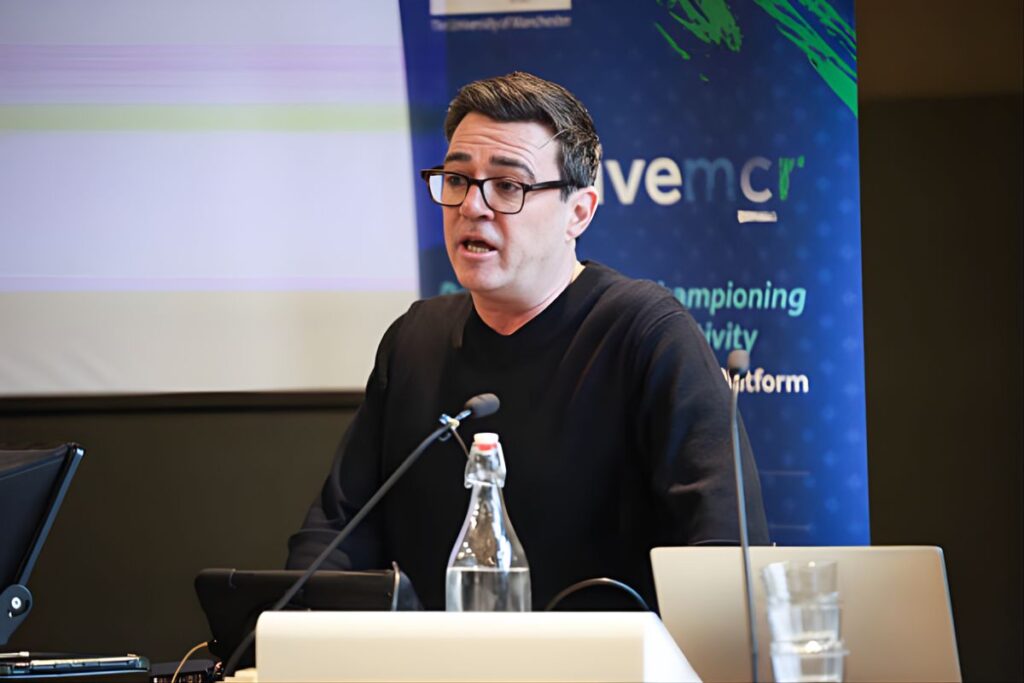
That’s basically where Labour is right now, with Andy Burnham.
Because yes, he’s “just” the Mayor of Greater Manchester. But he’s also one of the few Labour figures with proper name recognition outside Westminster and one of the only ones who can walk into a Northern pub and not get the look of “go on then, impress me”.
So when a vacancy appears in Gorton and Denton, and Burnham’s name starts circling again, it isn’t just local gossip. It’s a live wire. And it’s making Starmer’s allies twitchy enough that the words “Stop Andy Burnham” are now being used out loud in serious reporting. That’s not subtle. That’s not even polite.
And here’s the uncomfortable bit. If Burnham did return to Parliament, people would instantly read it as the first step towards something bigger. Perhaps it could pave the way for a potential cabinet position in the future. Maybe a platform for a leadership push one day. Maybe just a very loud “I’m still here” aimed straight at Labour HQ.
Either way, the party machine hates surprises. Burnham is a surprise shaped like a man.
The Gwynne Resignation: A Westminster Vacancy
The resignation of Andrew Gwynne, the sitting MP for Gorton and Denton, escalated this story, setting off the expectation of a by-election. Gwynne’s departure (confirmed on January 22, 2026) wasn’t just a sudden political exit; it was the final chapter of a turbulent year.
Crucially, at the time of his resignation, Gwynne was no longer a Labour MP in the traditional sense. Following his suspension from the party in February 2025 over the “Trigger Me Timbers” WhatsApp scandal, he had been sitting as an Independent. His official resignation, citing “significant ill health” and the mental toll of the ongoing parliamentary standards investigation, finally vacates a seat that has essentially been in political limbo for nearly a year.
Most of the reporting frames this as a moment that creates an obvious opening for Burnham, whether he runs or not. Because the seat was held by an Independent who was formerly Labour, the party is desperate to “reclaim” it with a high-profile, unifying candidate—or, conversely, a safe pair of hands who won’t rock the boat.
The “Burnham Clause”: A Game of Political Gatekeeping
Here’s the reality that the casual observer misses: this isn’t just a case of Andy Burnham “fancying a go” and jumping on a ballot. As the sitting mayor of Greater Manchester, he’s essentially handcuffed to the party’s rulebook.
To even get a sniff of the Gorton and Denton selection process, he has to navigate what insiders are calling the “Burnham Clause”. This specific rule mandates that directly elected mayors need “express permission” from the National Executive Committee (NEC) before they can even seek a nomination. This isn’t just a bit of admin—it’s a massive barrier.
Right now, the reports coming out of the NEC are pretty bleak for him. Loyalists to the current leadership have been quoted as saying his chances of getting that green light are “zero.” Why? Because the people at the top of the party machinery see a Burnham return as the first move in a leadership coup.
It’s no longer a local vote; it’s a high-stakes permissions game controlled by the party’s central office. And when the leadership decides they don’t want you in the room, the rulebook can become a very effective weapon.
The ‘Stop Andy’ Campaign: Why Westminster Fears a Manchester Return
The phrase “Stop Andy Burnham” sounds like a bit of a laugh; a student slogan from the back of a pub. But in the cold, grey light of January 2026, it’s being treated as a literal tactical brief in the corridors of Westminster.
Why the sudden panic? Because if Burnham walks back into the House of Commons, the Labour Party’s internal gravity shifts instantly. He doesn’t even need to plot; people will do the maths for him.
In a world where Starmer’s poll numbers are wobbling, Burnham is the only senior figure left with “Goldilocks” approval ratings: high enough to lead but outside the current Cabinet’s baggage. Politics is rarely about what you’ve said you’ll do; it’s about what everyone else fears you’re capable of doing.
Then there’s the sheer logistical mess. If Burnham quits as mayor to become the MP for Gorton and Denton, a mandatory mayoral by-election is triggered. We aren’t just talking about a distraction; we’re talking about a £2 million bill and a massive drain on party resources during a year of critical local elections.
For the NEC loyalists, it’s a “selfish” move that risks handing the Manchester mayoralty to Reform UK on a silver platter.
Also read: Democrats Win Miami Mayorship After 30 Years
Why a Burnham Exit Could Open the Door for Reform UK
Labour isn’t just looking at the internal math; they’re staring at a map of the North that looks increasingly fragile.
As Mayor, Burnham is arguably the party’s most potent regional asset. If he vacates that office, he doesn’t just leave a job; he leaves a vacuum. Reports from late January 2026 suggest a “palpable anxiety” among Labour strategists that a mayoral by-election could become a “totemic” win for Reform UK. Nigel Farage’s party is already circling, ready to frame any Labour infighting as a sign that the “metropolitan elite” has finally abandoned its Northern base.
The Reform UK candidate came second in Gorton and Denton in the 2024 General Election. This justifies why the NEC is so “panicked” about a by-election.
And honestly? That fear isn’t purely political paranoia. It is rooted in a reality that the voters of Greater Manchester live and breathe every time they hit a six-inch-deep pothole or wait for a bus that never comes.
For decades, the North has been treated as a prize to be won, rather than a place to be served. People are exhausted. They don’t want a “Westminster soap opera”; they want public services that do not appear to be held together by duct tape and good intentions.
When parties start playing internal permissions games, the voters don’t just notice; they start looking for the exit.
Also read: Rachel Reeves Got Her Pension Numbers Wrong (And It’s Not The First Time)
Why Manchesterism is Burnham’s Secret Weapon
A lot of politicians try to manufacture a “brand”, and it usually ends up looking like a desperate, over-polished LinkedIn post.
Burnham’s is different. Since 2017, he’s spent his time being visible, stubborn, and obsessively focused on a “Manchester-first” narrative. Just this week at the Institute for Fiscal Studies, he unveiled his “Manchesterism” plan, which is a bold blueprint to reindustrialise the North by creating massive “growth clusters” in sectors like AI and green energy.
It’s a functional, “boots-on-the-ground” type of power that serves as a jarring contrast to the perceived chaos and policy-by-focus-group culture currently stalling in Westminster.
But here is the detail that actually gives the leadership a cold sweat: Burnham is unusually popular for a contemporary politician. He is the sole senior figure in the Labour orbit who has consistently, according to polling by Ipsos from January 2026, positive approval ratings.
While all but the most delusional activists know that Starmer’s numbers are worse than Burnham’s, his electoral popularity is now a political asset selling at a premium. People are taking him seriously because he has done something rare: he has made local government feel like a real alternative to national gridlock.
So when there’s even a hint of him returning to Parliament, it doesn’t just seem like a rumour; it seems like the tectonic plates shifting in British politics.
The Three Messy Realities of a Burnham Comeback
If you want the short version, here are the paths this drama could take—and none of them are particularly neat. We are looking at a political landscape where every “solution” creates a fresh problem.
First, Burnham could decide to sit this one out. Even then, the story doesn’t die; it actually proves how jumpy the Labour leadership is that they spent a week in a “Stop Andy” panic over a race he wasn’t even in.
Second, he could try to run and get spiked by the NEC. This turns the Gorton and Denton by-election into a loud, ugly argument about party democracy and central control; hardly the “unity” vibe the Prime Minister wants. Finally, he could get through, win the seat, and instantly become the most powerful “what if” in the House of Commons.
ITV News has been tracking this shift in the atmosphere since the moment Andrew Gwynne’s resignation was confirmed on January 22. Their reporting suggests that the “expectation of a comeback” is now its own political force.
Whether Burnham ultimately pulls the trigger or not, the mood has already changed. In politics, once people start talking about your return as an inevitability, you’ve already won half the air war.
Key Dates to Watch (Projected 2026)
- January 22: Andrew Gwynne officially resigns; the countdown begins.
- Late Jan / Early Feb: NEC meets to decide “permissions” and candidate shortlists.
- April 7: Legal deadline for the writ if the vote is to join “Super Thursday.”
- May 7: Super Thursday. The most likely date for the Gorton and Denton by-election.
The Final Verdict: A Party at War with Its Own Success
Look, by-elections happen all the time. Usually, they are sleepy affairs about local grievances. But the Gorton and Denton race is different. It isn’t just a vacancy; it’s a stress test for the entire Labour project. This story has caught fire so fast because it hits the three things the party leadership fears most: internal division, a loss of central control, and a popular alternative to the status quo.
When you see outlets like The Guardian and Sky News reporting on a coordinated “Stop Andy Burnham” campaign, you aren’t just watching background noise. You’re watching a party machine in survival mode. The leadership is terrified that a Burnham return—while electorally popular—would trigger a “psychodrama” they can’t manage. They’d rather risk a £2 million by-election bill and a potential Reform UK surge in the North than let a man they can’t control back into the Westminster fold.
In the end, this isn’t just about one man or one seat. It’s about whether the Labour Party is a broad church or a gated community. That’s the gritty reality of British politics in 2026. It’s rarely pretty, it’s rarely fair, and right now, it’s anything but boring.
FAQ
Q. Is Andy Burnham an MP right now?
A. No. As of late January 2026, he remains the Mayor of Greater Manchester. The current frenzy is about whether he can secure a nomination for the upcoming by-election.
Q. Why is there a by-election in Gorton and Denton?
A. The seat was vacated by Andrew Gwynne, who officially resigned on January 22, 2026, on medical grounds. His GP advised that it was “unsafe” for him to return to work following a year of intense stress and “significant ill health”.
Q. Was Andrew Gwynne a Labour MP when he resigned?
A. Technically, no. Since February 2025, Gwynne had been sitting as an Independent MP. He was sacked as a health minister and suspended from the Labour Party following the “Trigger Me Timbers” WhatsApp scandal, where leaked messages showed him making offensive remarks about constituents and fellow MPs.
Q. Why would Labour’s leadership try to block Burnham?
A. Because his return to Westminster isn’t just a career move; it’s a power shift. Starmer’s allies fear that a “King of the North” in the House of Commons would become a permanent “leader-in-waiting”, destabilising the current Cabinet.
Q. Can Burnham stand without stepping down as mayor?
A. In practice, the key issue is party permission and selection rules for a sitting mayor seeking to become an MP. Reporting suggests that’s where the block is being applied.
Q. What’s the risk for Labour if Burnham leaves the mayor role?
A. It could trigger a mayoral by-election in Greater Manchester and create political risk and cost, plus give opponents a high-profile target.
Sources & References
- Sky News (Jan 22, 2026): MP Andrew Gwynne resigns, triggering by-election and potential Burnham return – Details on Gwynne’s medical resignation and the 13,000 majority.
- The Guardian (Jan 22, 2026): Starmer’s allies launch ‘Stop Andy Burnham’ campaign – The source for the “Zero chance” quote from NEC members.
- BBC News (Jan 23, 2026): The ‘Burnham Clause’: The procedural hurdles facing the Manchester Mayor – Analysis of the policing powers restriction and the NEC permission rule.
- LabourList (Jan 16, 2026): Burnham’s Britain: How ‘Manchesterism’ plans to rewire Westminster – Source for his IFS speech on reindustrialisation and AI growth clusters.
- Manchester Evening News (Jan 23, 2026): The Reform UK Threat: Why Gorton and Denton is no longer a ‘Safe Seat‘ – Context on Reform UK’s 2024 performance and current polling surge.
FBU / Steve Wright Statement (Jan 22, 2026): Reported across The Guardian and Mirror—the Fire Brigades Union’s warning that blocking Burnham would be a “democratic outrage.”
Recommended