
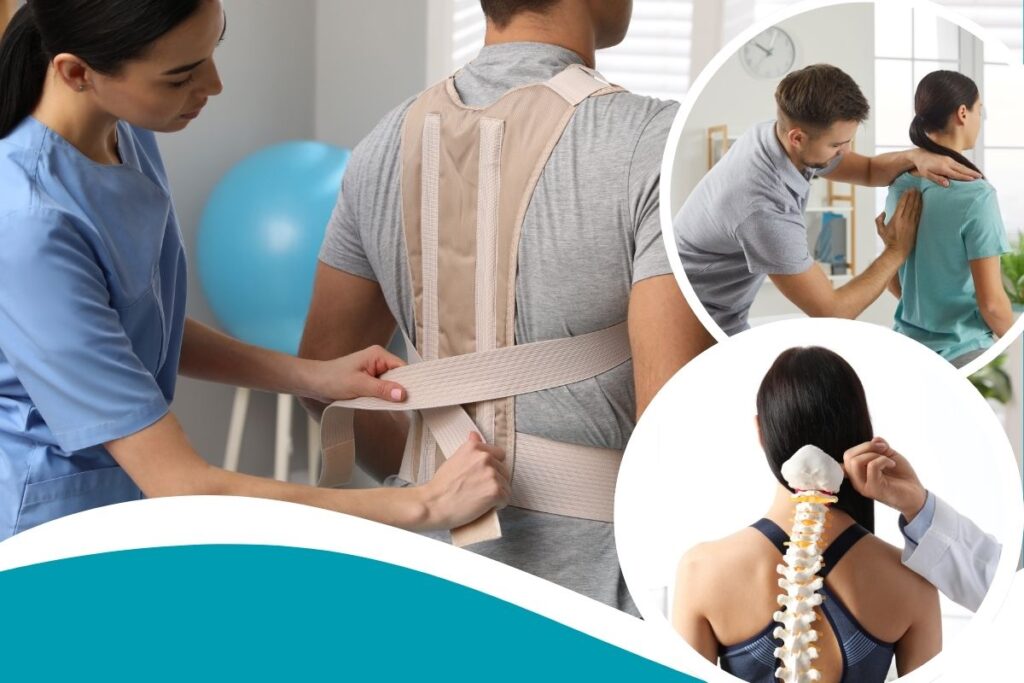
Ever caught your reflection in a shop window and thought, hang on… have I always stood like that? It’s a strange moment. You straighten up for a second, then forget about it five minutes later. Days turn into months. The neck starts stiff in the mornings, shoulders inch forward without permission, and when you get up off a sofa, it’s accompanied by a small coughing groan that wasn’t there before. There has been no accident and no warning sign. Just years of screens, desks, and evenings spent hunched over a phone while the tea goes cold on the side table.
Most people don’t think about posture until something nags. Not sharp pain, more like constant dull tension that refuses to leave. That spot in between your shoulder blades always seems tight. The headache begins at the back of your neck and gradually ascends. It’s subtle, which is almost worse, because you’re constantly brushing it off. Lately, more people across the UK have started looking into things like a posture corrector UK simply because sitting all day has become a normal part of life. Working from home, working in offices, scrolling on trains. It adds up quietly.
Now, a posture corrector isn’t some miracle gadget. It won’t suddenly turn anyone into a perfectly upright statue by tomorrow morning. What it does, when used sensibly, is give a gentle reminder. A little prompt to pull the shoulders back and wake the muscles up. For many people, that small reminder is enough to start changing habits, and habits are usually where the real difference begins.
Why We’ve All Become Human Question Marks
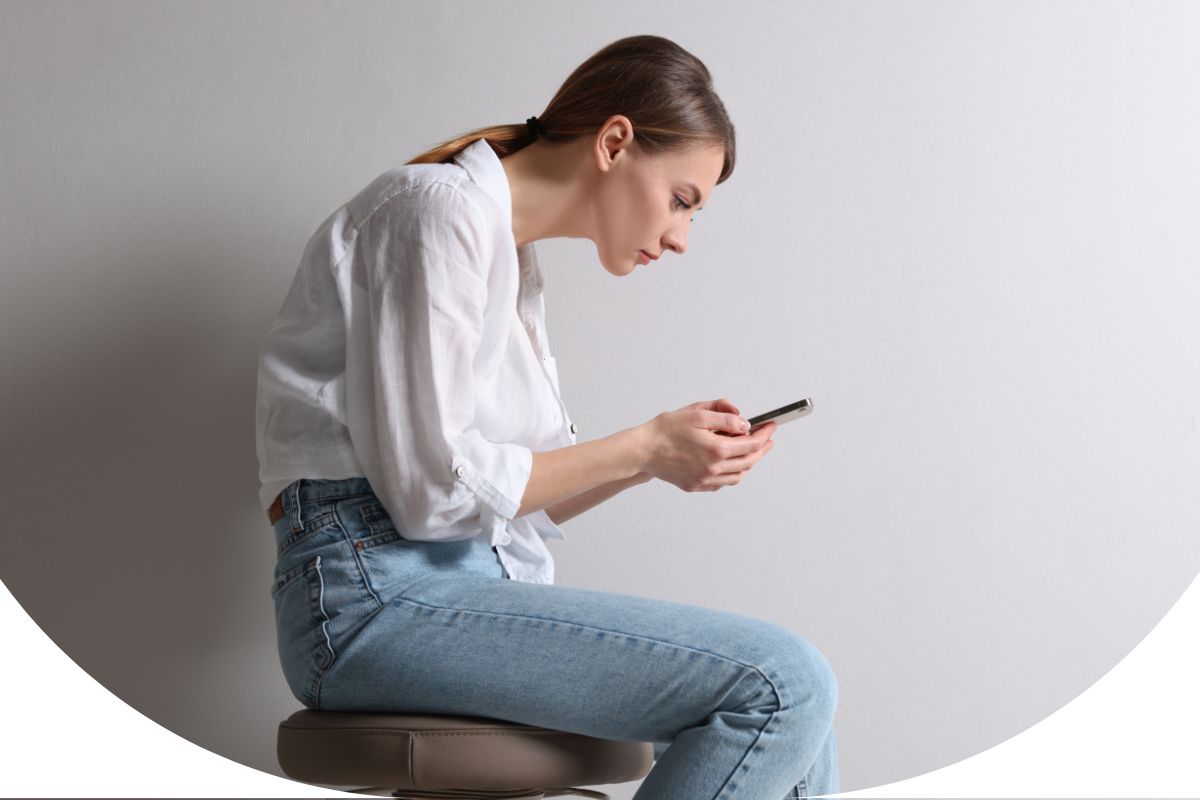
Walk into any train carriage at rush hour in 2026, and you’ll see it. Heads tilted down. Shoulders curled forward. Spines bent like fishing rods. It’s not just commuters either. Look at any teenager on a bus or an office worker in a glass-walled building in the city. This posture epidemic is everywhere.
According to guidance published by the NHS, prolonged sitting and poor workstation setups are major contributors to the back and neck pain currently sweeping across the UK. It’s rarely a sudden “snap” that does it. It’s subtle. But over time, subtle turns into constant. Slouching pulls your muscles right out of balance. Your chest tightens up, your upper back weakens, and eventually, standing straight actually feels uncomfortable. It’s a bit mad when you think about it. Your body starts to find its natural, healthy position “weird”.
Most people don’t notice until the pain shows up. And let’s be real, pain is usually the only wake-up call we actually listen to. By the time you’re Googling “posture corrector UK at 11 pm because your neck is throbbing, you’re already deep in the “tech neck” hole.
Finding the Right Gear: Which Posture Corrector Actually Works?
If you start looking for a fix, you’ll realise the market is absolutely flooded. It’s a bit overwhelming. You’ve got everything from basic elastic straps to high-tech gadgets that look like they’re from a sci-fi film.
In my time looking into this, I’ve found that the “best” one depends on how far gone your slump is. If we’re looking at the top trending solutions in the UK for 2026, there are three main paths you can take:
1. The Medical Heavy-Hitters
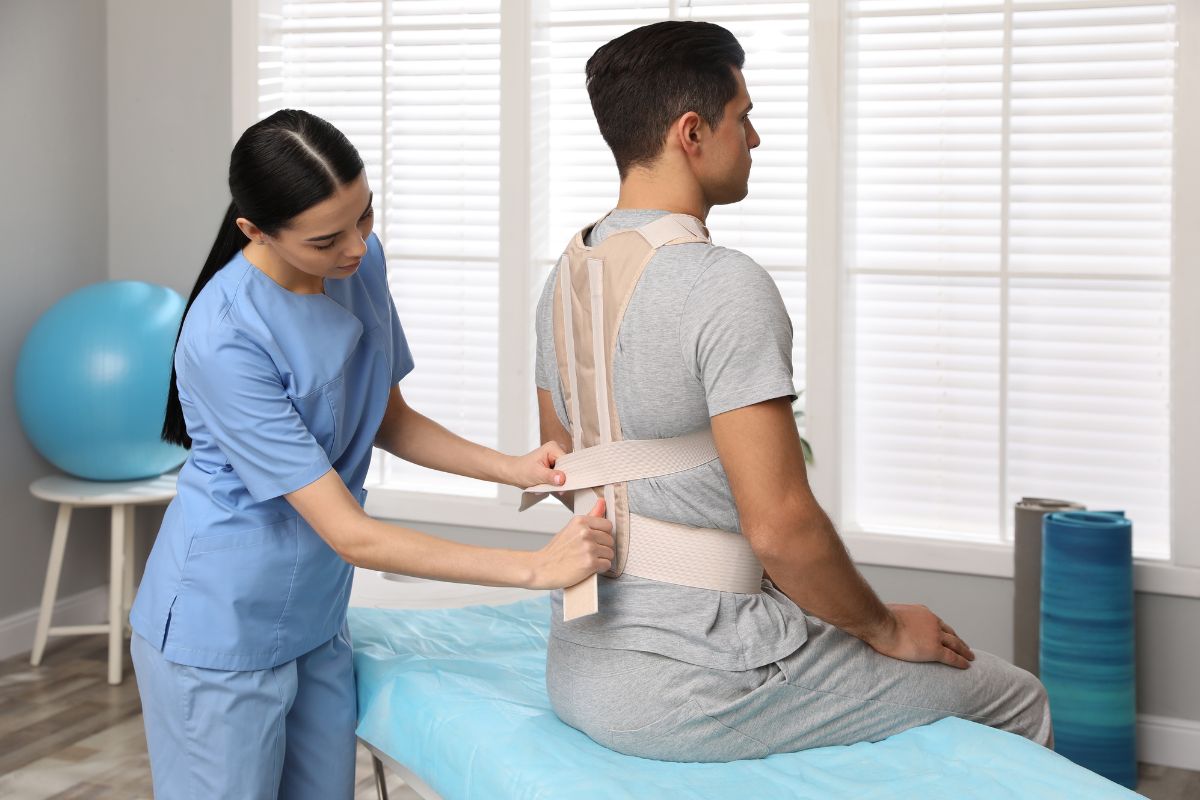
Brands like Neo G are the ones you’ll likely see in your local pharmacy or on sites like Health and Care UK. These are medical-grade braces. They’re designed for people who really need a firm hand. If you’ve got a severe slump or you’re recovering from a clavicle injury, these are the gold standard. They don’t mess about. They use sturdy materials to hold your shoulders back physically.
2. The Discreet “Invisible” Braces
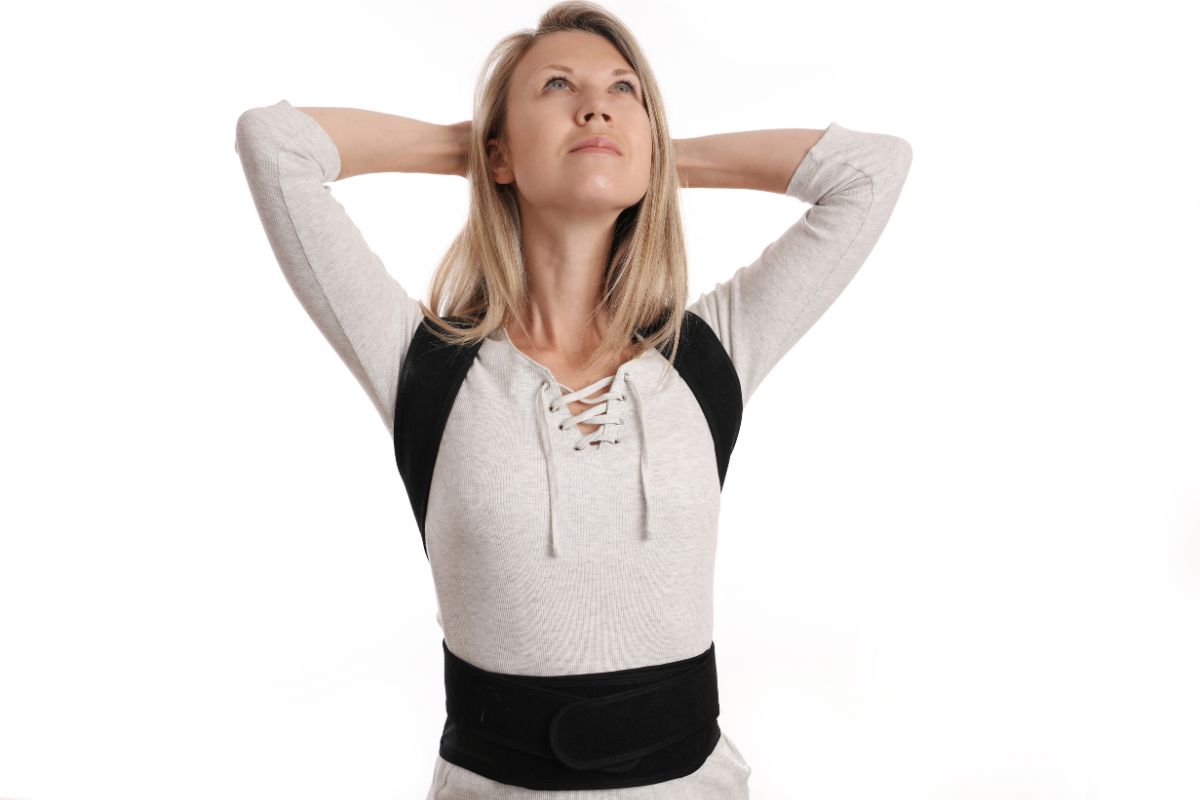
Then you have the more modern, ventilating correctors from places like Podobrace UK. These are for the person who wants support but doesn’t want to look like they’re wearing a parachute under their jumper. They’re thinner, breathable, and great for the humid UK weather we occasionally get. They provide a gentle pull that says, “Hey, remember your spine?” without making you feel like you’re in a straitjacket.
3. The Smart Biofeedback Crowd
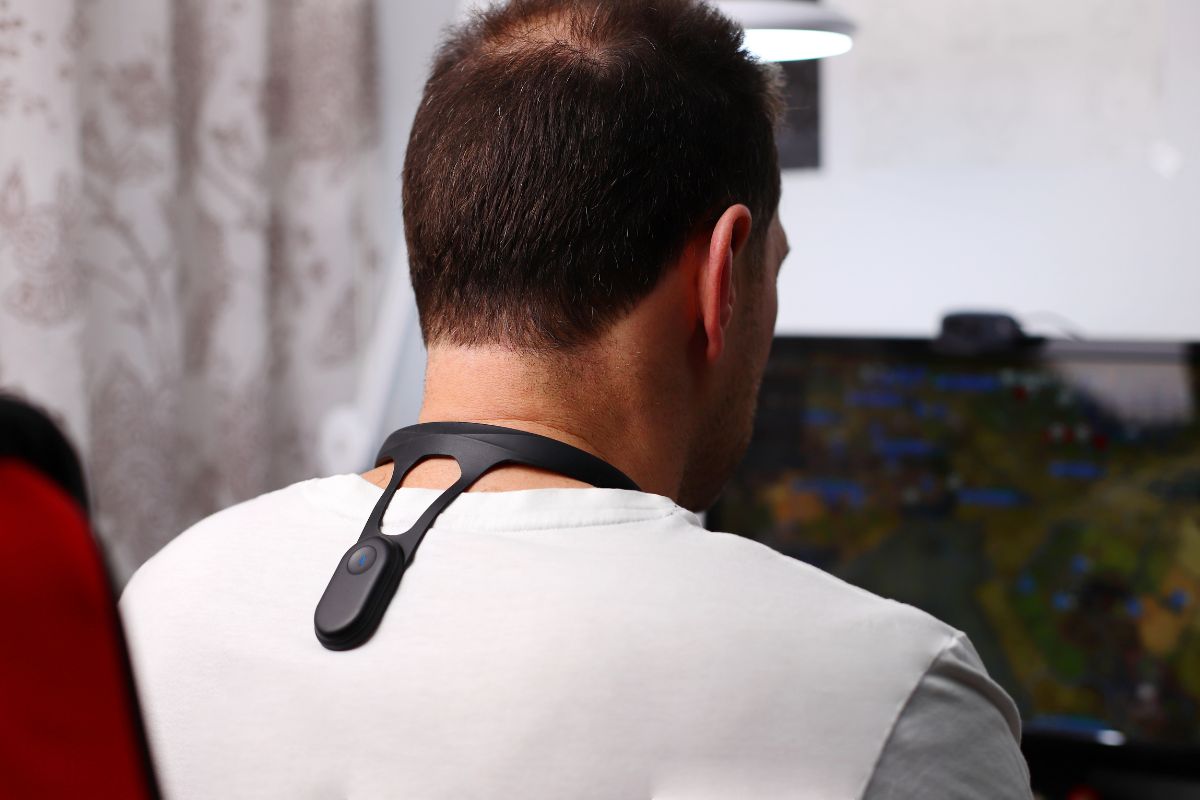
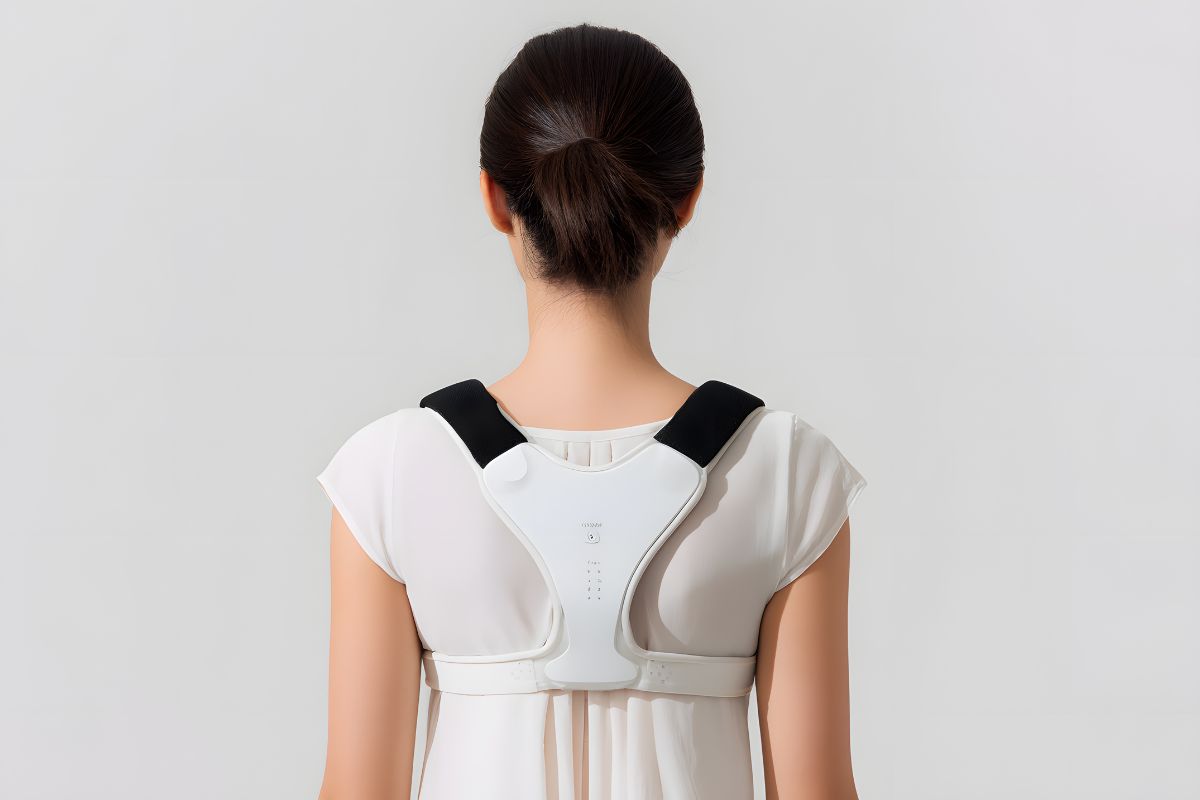
The newest player on the block is the Smart Posture Corrector device. This is a total shift in how we think about the problem. Instead of a harness, you have a tiny sensor—something like the Upright Go 2—that sticks to your upper back. It doesn’t pull you anywhere. Instead, it vibrates every time you slouch.
Does It Actually Work Or Is It Just Marketing?
Look, here is the truth that most companies won’t tell you. A brace is a tool, not a permanent fix. If you strap yourself in and let the brace do all the work, your muscles will actually get weaker. It’s called muscle atrophy. Your body thinks, “Oh, the straps have got this,” and it just stops trying.
The people who see real results are the ones who use these devices as a training tool. Think of it like a coach. You wear it for 30 to 60 minutes a day while you’re at your desk. It “teaches” your brain what it feels like to be upright. A 2025 study on ergonomic habits showed that this “active” reminder is far more effective for long-term muscle memory than just wearing a passive brace for eight hours straight.
So, yes, a posture corrector UK works—but only if you do the work too.
Also read: Ayurvedic Wellness Rituals: Timeless Practices to Elevate Modern Life
The Tech Revolution: Using A Smart Posture Corrector Device
I’ll admit, I was sceptical about the vibrating gadgets at first. I thought they’d just be annoying. And yeah, they are annoying—but that’s why they work.
When you use a Smart Posture Corrector device, you’re forced to engage your own core. You’re the one doing the lifting. Most of these gadgets now come with apps that track your progress. You can see your “slouch score” improve over a week. For us Brits who love a bit of data (and a bit of a challenge), it’s actually quite satisfying. The only downside? The adhesive. If you’ve got sensitive skin, you might prefer the necklace version, which just hangs around your neck and senses your angle.
How To Permanently Fix Posture (Without The Gadgets)
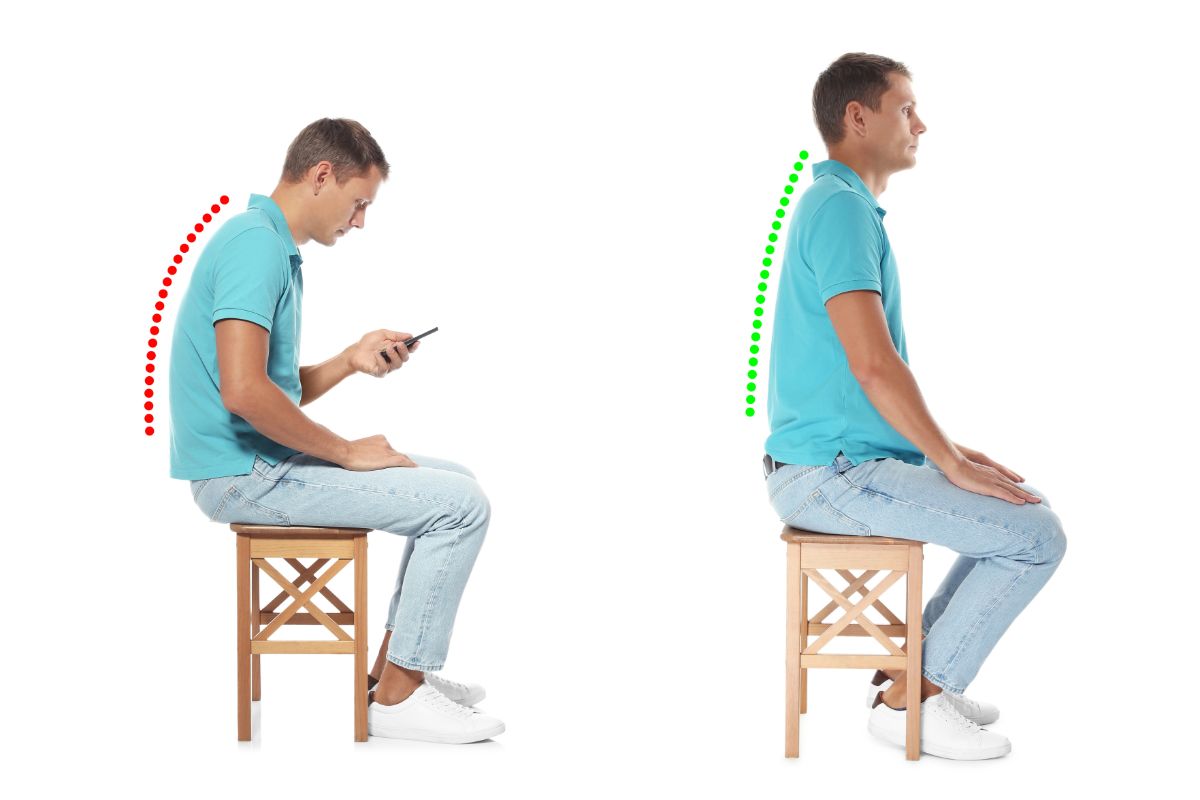
Eventually, the goal should be to bin the corrector. You don’t want to be 50 years old and still needing a strap to sit through a cinema screening. To fix things permanently, you have to address the root of the problem.
- The 30-Minute Rule: Every half hour, stand up. I don’t care if you’re in the middle of an email. Move your neck, roll your shoulders.
- Strengthen Your Back: No gadget can replace a strong muscle. Simple exercises like “rows” or “planks” are your best friend here.
- The Mirror Test: Use your reflection for more than just checking your hair. Check your side profile. Is your ear over your shoulder, or is it miles in front?
Look, I’ll be blunt—there’s a bit of a dodgy side to these gadgets that those polished social media ads won’t tell you. If you treat a posture corrector UK like some magic strap that does all the heavy lifting for you, you’re basically asking for trouble. It isn’t a “set it and forget it” fix for a messy spine.
The real danger is what I call “The Lazy Muscle” trap. See, your body is incredibly efficient at being lazy. If you strap yourself into a rigid harness for eight hours straight, your back and core muscles just… give up. They figure, “Well, the neoprene’s got this, I’m off for a brew.” Over time, they actually get weaker. This is known as muscle atrophy. It’s the worst possible outcome because the moment you take that brace off, you’ll collapse like a wet cardboard box.
Then there’s the tendency to go overboard. I’ve seen people yank those straps so tight they look like they’re preparing for a bungy jump. That’s a massive mistake. If you over-tighten, you’re looking at:
- Pinched Nerves: If your hands start tingling or your arm goes a bit numb, you’re squashing the nerves in your armpits. Not good.
- Skin Rash: Especially with our lovely British humidity, having thick fabric rubbing against your skin for hours is a fast track to a nasty, itchy rash.
- Shallow Breathing: Your ribs need to move. If you can’t take a proper, deep lungful of air, that thing is way too tight.
Most UK experts and the NHS aren’t massive fans of using these as a permanent crutch. They’re meant to be a coach, not a substitute for your own strength. Use it for maybe 45 minutes while you’re slumped at your laptop, let it “remind” you where your shoulders should be, and then take it off. If you don’t do the resistance training exercises to go with that, it’s like putting a Band-Aid on a broken leg.
Truthfully, if it is pinching or hurting you, making you feel as if a tormentor has tied you up in your own clothes, loosen it. Your spine requires a nudge, not a prison sentence.
Also read: What Size of Ovarian Cyst Is Dangerous? Here’s What I Wish Someone Had Told Me
Is It Too Late For You?
I hear this a lot: “I’m 55, my back is set in stone now.”
Rubbish. It is rarely too late to improve. While you might not get back to the perfect alignment of a 10-year-old, you can absolutely reduce pain and increase your range of motion. The body is incredibly adaptable. Whether you’re 25 or 65, starting a routine of stretching and using a Smart Posture Corrector device as a reminder can make a world of difference to your daily comfort.
The Verdict
Look, at the end of the day, picking up a posture corrector UK is a solid first move. It’s basically you admitting that your back is screaming for a bit of help. Whether you go for one of those beefy Neo G braces or a little buzzing Smart Posture Corrector device, you’re finally doing something about the “desk-slump” we’re all guilty of.
But here’s the real talk: it’s a two-way street. These gadgets are there to give you a nudge, not to do the whole job for you. If you just strap in and let your muscles go on a permanent tea break, you’re missing the point. You’ve got to be the one actually putting in the effort to sit up. Don’t let a bit of neoprene or a sensor become a crutch that makes your back even lazier than it was before.
Anyway, I’ve been sat here typing this for way too long now. I can literally feel my own shoulders creeping up toward my ears as we speak. Right, I’m off to have a proper stretch and put the kettle on.
How are you sitting while reading this? Might be time to roll those shoulders back, yeah?
FAQ
Q. How long should I wear a posture corrector UK daily?
A. Most physios over here recommend a gentle approach — 15 to 30 minutes at a time. You can work up to an hour or so when you’re sitting at your desk, but wearing it all day long will actually cause your back muscles to get lazy and weak.
Q. Can I wear a posture corrector while sleeping?
A. It’s generally not a great idea to wear one in bed. You want to be able to move and sleep comfortably, because your body needs to relax while you rest—and if a brace is inhibiting your breathing or making it difficult for you to relax in bed, you might actually wake up quite stiff.
Q. Is it ever too late to fix my posture?
A. Not at all. While younger spines are far more flexible, adults of any age can help encourage proper alignment through muscle strength and awareness. It’s about having less pain and feeling better more than being “perfect”.
Q. Will a posture corrector permanently fix my back?
A. On its own, no. It’s a training tool that reminds you to sit up, but the real fix comes from doing back exercises and changing your desk setup. Think of the brace as a coach and the exercises as the actual work.
Q. Are smart posture correctors better than traditional braces?
A. They both have their perks. Braces provide physical support if you’re really struggling, while smart devices use vibrations to train your brain to use its own muscles, which is often better for long-term memory.
Sources and References
Health and Care UK (2026) Posture correctors. healthandcare (Accessed: 30 January 2026).
MDPI (2025) ‘Effectiveness of wearable devices for posture correction: a systematic review’, Applied Sciences, 16(1), p. 81. (Accessed: 30 January 2026).
Neo G UK (2026) Posture supports and braces. (Accessed: 30 January 2026).
NHS (2025). Back pain. Available at:(Accessed: 30 January 2026).
Podobrace UK (2026) Posture corrector & back straightener. (Accessed: 30 January 2026).
Upright (2026) The science of posture. (Accessed: 30 January 2026).