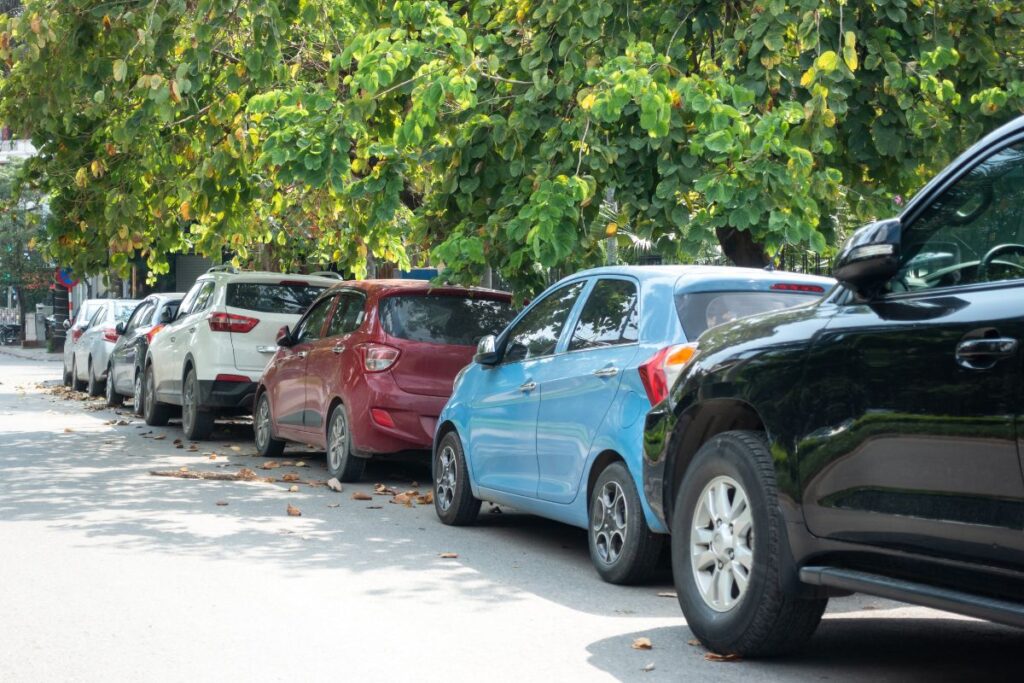
Walk down any residential street in Falkirk three months ago, and you’d be squeezing past cars parked half on the pavement. Mums with prams forced onto the road. Wheelchair users have to go the long way round. Just accepted as normal.
Not anymore. The Falkirk pavement parking ban started properly on August 18, 2025, with £100 fines. Now it’s mid-November and the pavements are actually clear. Proper working like they should.
When Does Parking on the Pavement Become Illegal in Scotland?
Technically, it has been illegal throughout Scotland since December 2023. So, when exactly does the pavement ban start in the UK – Scotland at least? England and Wales have yet to figure it out.
But there is illegal and there is enforced. For the most part, Scottish councils spent 2024 issuing warnings. By May 2024, Falkirk Council had issued 1,800 warning notices. In other words, “This is coming; get used to it.”
And then came Aug. 18, 2025, and the fines began. £100 if a single wheel is on the pavement. Drops to £50 if you pay within 14 days, but that’s still real money.
Edinburgh started enforcing back in January 2024. Falkirk took longer because they wanted to assess every street first. All 2,360 roads across the council area were looked at to see which ones might need exemptions.
Why It Actually Matters
Allan McBride lives in Shore Road, Airth. He’s severely sight-impaired. Before the ban, cars were parked fully on the pavement outside his flat.
He told the Herald: “Vehicles park partially and sometimes fully on the pavement outside my kitchen and lounge. Parked cars on pavements can disrupt these plans, making it harder to get around and requiring me to step onto the road.”
That’s properly dangerous when you can’t see traffic coming. Allan plans his routes because he needs predictable paths. Cars blocking pavements force him into live traffic with no warning.
Council Leader Cecil Meiklejohn said, “For blind and partially sighted individuals, pavements are structured, predictable routes. When vehicles block these spaces, people are forced into live traffic, often without warning or protection.”
It’s not just people with sight loss either. Wheelchair users, parents with prams, anyone with mobility issues – they all got forced onto roads by inconsiderate parking.
The Rules Are Simple
Can’t park on pavements. Can’t park on low verges next to roads. Can’t block dropped kerbs. Can’t double park.
Even one wheel on the pavement counts. You need all four wheels on the road, or you’re getting a ticket.
Dropped kerbs are the tricky bit. Can’t park across from them at all, even if there’s no driveway there. They exist so wheelchair users and buggies can cross streets safely.
The council’s FAQ says: “Generally, it will be clear because there will be no corresponding driveway or garage for a vehicle to enter. You should consider how a wheelchair user might want to cross from one pavement to another.”
Basically, if you’re not sure whether you’re blocking a dropped kerb, park somewhere else.
The Exemptions
Emergency vehicles, obviously. Ambulances, fire engines, police cars – they can park wherever needed.
Delivery drivers get 20 minutes to drop stuff off. But only if there’s genuinely nowhere else to park on the road, and they have to leave at least 1.5 metres of pavement clear.
Medical professionals on emergency calls. Waste collection lorries. Royal Mail vans. All are exempt whilst doing their jobs.
Blue Badge holders? Not exempt. The ban applies to everyone. Loads of disabled people assumed they could still park on pavements, but nope. Same rules for everyone.
Fife Pavement Parking Ban Exemptions and Others
Twenty-one streets in Falkirk are being considered for exemptions. Really narrow streets where cars literally can’t park on the road without blocking traffic completely.
These streets won’t get enforced until the council finishes assessing them and puts up proper signage. Fife pavement parking ban exemptions work similarly – each council is assessing their own streets individually.
But exemptions are rare. The guidance says pedestrians should be prioritised. You can’t just claim your street needs an exemption because parking will be inconvenient. Has to be genuinely impossible to park on the road safely.
If a street gets an exemption, it’ll be clearly signposted. If there are no signs saying pavement parking is allowed, then it’s not.
How to Report Pavement Parking in Scotland
Each council handles it differently. For reporting pavement parking in Falkirk, you’d contact Falkirk Council’s parking enforcement team through their website.
They’ve hired two extra enforcement officers specifically for this. One of the new roles works the back shift because most pavement parking happens evenings when people get home from work.
The officers patrol regularly now. They don’t need to observe for a set time – if they see a car on the pavement, they can ticket it immediately.
If a car’s causing a proper obstruction, like blocking emergency access, call Police Scotland on 101 instead. That’s a different issue from just parking on pavements.
The Money Side
Councillor Robert Spears said he hoped any income from fines would go to “fixing potholes and repairing pavements.” Makes sense – years of cars parking on pavements have damaged loads of them.
Councillor Laura Murtagh reckoned the council shouldn’t make any revenue at all because people will just change their behaviour. She’s probably right. Revenue dropped as people learned to park properly.
The first few weeks saw loads of tickets. Now it’s way less because drivers have adapted. Park on the road or find somewhere else. Simple.
Also read: Celtic Holiday Parks Administration: What Happened to Wales’ Popular Holiday Destination
Three Months Later
It’s mid-November 2025 now. The Falkirk pavement parking ban has been properly enforced for three months.
Walking through Stenhousemuir yesterday, the pavements were clear. Could get a wheelchair down them, no problem. Nobody was forced onto the road.
Spoke to a woman with a buggy outside the Asda. She said, “Proper nice not having to wheel my baby into traffic anymore. People moaned at first, but they got used to it.”
That’s the thing. People always moan about new parking rules. “Where am I supposed to park?” “My street’s too narrow!” “This is ridiculous!”
Then they adapt. Park further away and walk. Park fully on the road even if it’s tight. Be more considerate, basically.
Shore Road in Airth, where Allan McBride lives? Enforcement started there on schedule because it wasn’t considered for exemption. No more cars blocking his flat. He can navigate safely now.
The Wider Picture
Sixteen Scottish councils enforced the ban before Falkirk. Edinburgh’s been doing it since January 2024. Aberdeen, Glasgow, loads of others.
England and Wales? Still waiting. The legislation’s there, but councils haven’t started enforcing it yet. Pavement parking’s still technically illegal in London and has been for decades, but elsewhere in England it’s not properly enforced.
Scotland’s leading on this one. Making pavements actually usable for everyone instead of just people who can squeeze past parked cars.
Does It Work?
Yeah, it does. Pavements are clearer. People with mobility issues can actually use them. Simple as that.
The £100 fine (£50 if paid quickly) is enough to make people think twice. Most drivers don’t want to risk it, so they park considerately.
There’s still some pavement parking in streets being considered for exemptions. And occasionally someone parks badly and gets ticketed. But it’s way less than before August.
The behaviour change that Councillor Murtagh hoped for? It happened. Most people just park on the road now, like they’re supposed to.
The Falkirk Pavement Parking Ban Bottom Line
Started August 18, 2025. £100 fines, reduced to £50 if paid within two weeks. Covers pavement parking, double parking, and blocking dropped kerbs.
Twenty-one streets might get exemptions, but most won’t. Emergency vehicles and delivery drivers get limited exemptions. Everyone else parks on the road or elsewhere.
Three months in, it’s working. Pavements are usable. People adapted their parking habits. The town will be more accessible for people using wheelchairs and buggies and those with sight loss.
It’s not perfect; a few streets are still being evaluated, and some people still park badly occasionally. But miles better than before August, when cars on pavements were just accepted as normal.
Other Scottish councils are watching Falkirk’s approach. If it keeps working through winter when parking’s even more competitive, expect more councils to ramp up enforcement too.
For now, though? Walk down any Falkirk street and you can actually use the pavement like it’s meant to be used. Novel concept, that.
Recommended