
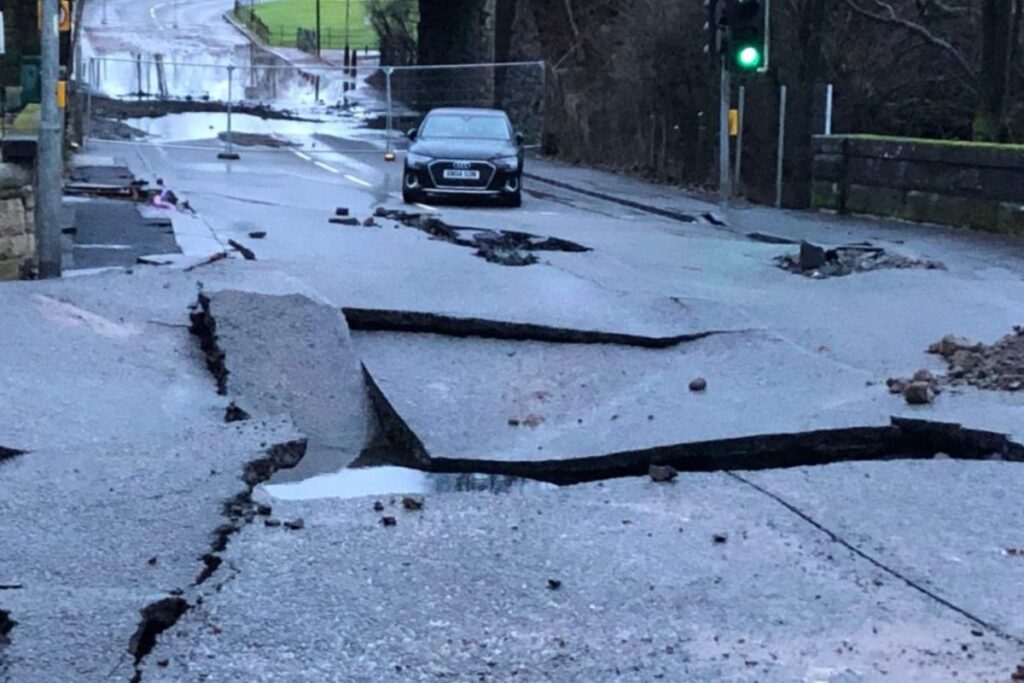
You know what’s mental? The situation can quickly spiral out of control when a water pipe bursts beneath one of Glasgow’s busiest roads.
Thursday, 29th May 2025. Most of the people in the East End would have been preparing for work, eating breakfast, or engaging in other typical morning activities by this time. And suddenly, water began gushing across Shettleston Road at St Mark Street. Not a trickle. A proper flood.
The Glasgow water main break on Shettleston Road happened so abruptly that thousands of people were caught completely off guard. Taps ran dry. Roads closed. Buses diverted. And for anyone who had to go anywhere that morning, it was a total nightmare.
How It Started
Sometime around about half six in the morning, a large water pipe under Shettleston Road just burst. The pipe was huge, about 27 inches in diameter, transporting thousands of litres of water to homes and businesses throughout the G32 postcode area.
When it burst, the water didn’t just gently trickle out. It erupted onto the road surface, flooding pavements and creeping toward nearby shops and houses. Within minutes, sections of Shettleston Road resembled a shallow river rather than a major arterial road.
Folks who were out early saw it first. Water everywhere. Traffic cones are appearing. Scottish Water vans are pulling up. That’s when everyone realised this wasn’t getting sorted quickly.
The section affected was between Old Shettleston Road and Fernan Street, with flooding as far as Hart Street. Basically, a key chunk of one of Glasgow’s busiest East End roads was suddenly out of action.
Why It Happened
Right, so why do pipes just suddenly burst like that?
The infrastructure supplying water to most of Glasgow is decades old. Some pipes were installed at a time when no one thought about the volume of traffic and weight they would ultimately have to support. Cast-iron pipes, which were common at the time, wear out over the years. They crack. They weaken at the joints.
Then you throw in temperature variations. Cold snaps make metal contract. Warmer days make it expand. And that constant state of stress, one year after the next, eventually takes its toll.
Heavy rainfall doesn’t help either. Water saturates the soil around pipes, adding pressure and causing the ground shift. And let’s face it, there is a lot of traffic on Shettleston Road. All the buses, lorries and cars are making vibrations that go down into the ground. Over time, that adds up.
For this one, it probably was a bit of all of those. The decades-old pipe, strained by age and wear, ultimately reached its breaking point on an otherwise ordinary Thursday morning.
No Water, No Warning
Turn on your tap. Nothing comes out.
Or worse, brown sludge sputters into your sink instead of clear water. That’s what thousands in G32 woke up to. No shower. No tea. Can’t wash your face. Can’t properly flush the loo.
Got kids? Nightmare. You’re trying to get them ready for school whilst dealing with no water. Elderly residents? Even harder. Some can’t easily pop to the shops for bottled water.
A café owner near the burst told reporters it was chaos. Had to turn away customers during the morning rush because they couldn’t make drinks or wash anything. Small businesses, already struggling, lost an entire day’s takings.
Some schools brought in bottled water. Others just dealt with it.
Traffic Was Chaotic
Shettleston Road isn’t some quiet back street. It’s a major route. Buses, delivery vans, school runs, commuters. Everything goes through there.
When Scottish Water closed it for repairs, all that traffic got shoved onto streets like Old Shettleston Road and Westmuir Street. Roads already busy suddenly became gridlocked.
Twenty-minute commutes turned into hour-long crawls. Buses (the 2, 46, 60, 60A, and 43) are all diverted. If you didn’t check your phone before leaving, you’d be standing at a stop, wondering why nothing showed.
Some folk gave up and worked from home. Others sat in traffic, absolutely raging.
Scottish Water’s Response
To be fair, Scottish Water teams were soon on the scene. They needed to isolate the ruptured section of pipe to shut off additional water from flooding. That required turning off the supply to adjacent areas, which is why so many homes abruptly stopped being able to access water.
Then came the tricky bit. You don’t get to put a patch on a 27-inch water main and walk away. Engineers needed to get down to the pipe, see what had happened, replace the broken section, and test everything before turning the water back on.
A spokesman for Scottish Water said their personnel were “working as hard as they can to control the flooding in the area” and investigating valves in a bid to restore supply to as many customers as possible.
They also established makeshift water distribution points. Shettleston Community Centre opened between 4 pm and 7 pm on Saturday, offering bottled water to those who wanted it. It’s not a great solution, but it’s better than doing nothing at all.
What You Should Actually Do Next Time
Because there will be a next time.
Brown water coming from your tap? Don’t panic. It’s grim but usually safe. Run your cold kitchen tap at a trickle (not full blast) till it runs clear. Takes maybe 30 to 60 minutes. Don’t use washing machines or dishwashers whilst you’re doing this.
White or cloudy water? That’s just air trapped in pipes. Clears on its own within a day or two.
If you’re vulnerable or elderly, register for Scottish Water’s Priority Services. Ring 0800 0778 778. They’ll make sure you get bottled water during outages.
And honestly, keep a few bottles stored at home. Not doomsday prepping. Just sensible. When a main burst occurs, shops sell out within hours.
Where We Are Now
As of January 2026, the May burst’s been fixed. Water supply’s back to normal in G32. The road’s resurfaced. Traffic flows fine.
But the underlying problem hasn’t gone anywhere. Glasgow’s pipes are still old. Still under stress. Somewhere beneath the city right now, another pipe’s probably developing cracks.
Scottish Water burst main today, live near Glasgow, searches spike every time another one goes. Folks want to know if their area’s affected, when water’s back, and which roads are closed.
The Glasgow water main break on Shettleston Road was significant. But it won’t be the last.
What Actually Needs to Happen
Look, upgrading an entire city’s water infrastructure isn’t cheap or quick. Scottish Water’s £3.5 billion investment is substantial, but spread across five years and the whole of Scotland, it’s still a massive challenge.
Priority should go to the oldest mains in the busiest areas. Places like Shettleston Road, where a burst doesn’t just cut off water but also creates traffic chaos, affecting thousands of people.
Improved monitoring technology could also help. Some water companies deploy sensors that can detect shifts in pressure or flow that could signal a pipe is about to fail. Catching problems early, before they become full-blown issues, would save a lot of disruption.
And between you and me, folk just need to be ready. Have a stock of bottled water at home. Know where to look for updates (Scottish Water’s website and Twitter are generally quickest). Sign up for any priority services if you need them.
Because until Glasgow’s pipes get a proper upgrade, this is the reality we’re living with.
FAQs
Q. When did the Shettleston Road burst happen?
A. Thursday, 29th May 2025, around 6:30 am near St Mark Street.
Q.Which areas had no water?
A. G32 postcode mainly. Shettleston, Parkhead, bits of Tollcross. Thousands of homes and businesses were affected.
Q. How long to fix it?
A. Most of the day for initial repairs. Partial water back within 12 to 24 hours. Full pressure and road reopening took another day or two.
Q. Why does this keep happening in Glasgow?
A. Old pipes. Many are decades old, made from cast iron that cracks over time. Temperature changes, heavy traffic, and rain all add stress. Eventually, they burst.
Q. What do I do if my water’s brown?
A. Run your cold kitchen tap at a trickle till it’s clear. Usually 30 to 60 minutes. Don’t use other taps or appliances whilst doing this. If it doesn’t clear, ring Scottish Water on 0800 0778 778.
Q. Where do I find updates about water issues?
A. Scottish Water’s website (scottishwater.co.uk) or their Twitter (@scottish_water). Put your postcode in their service updates page for local info.
Recommended