

Every month, the same thing happens. A research firm publishes sales data for Lucid’s Gravity SUV. Then Lucid says those numbers are completely wrong.
The Lucid Gravity sales data dispute started when Motor Intelligence reported 130 Gravity SUVs sold in September. Lucid immediately said that was “inaccurate and not even in the ballpark.” Back in July, Motor Intelligence claimed zero Gravity deliveries happened. Lucid’s interim CEO called that “totally false” during an earnings call.
This has been going on for months now. And honestly, it’s getting weird.
The Numbers Don’t Add Up

S&P Global Mobility said only nine Gravity SUVs got registered in the US between January and June 2025. Nine vehicles. For a car that started production in December 2024, that’s shockingly low.
Lucid says they’ve sold “multiple hundreds” already. So where’s the disconnect? They claim it’s all about timing. When you buy a car, there’s a delay before it shows up in DMV records. Demo vehicles for dealerships and press cars don’t always get registered immediately, either.
That explanation makes sense to a point. But hundreds versus nine? That’s not a timing issue. That’s a massive gap.
Why Lucid Keeps Fighting These Reports
Most car companies just ignore third-party sales estimates. Lucid can’t afford to do that. Their stock’s been hammered—it’s trading around $2 now, down from over $50 in 2021. Saudi Arabia’s Public Investment Fund owns 58% of the company. Bad sales reports make the stock drop even more.
Motor Intelligence admits its figures are “sales estimates” using data and market insights. They’re not claiming perfect accuracy. But when a company keeps calling your numbers totally false, something’s off.
The Lucid Gravity price starts at $94,900 for the Grand Touring trim. A cheaper Touring version at $79,900 is supposed to come later this year. At those prices, you’re competing with BMW, Mercedes, and Rivian. Tough crowd.
What’s Really Going On With Sales
Lucid doesn’t break out US sales numbers. They report global quarterly deliveries, but that’s it. No monthly data. No country breakdowns. This makes it impossible to verify anything.
Here’s what we know for sure. Lucid delivered 4,078 vehicles globally in Q3 2025. They produced 3,891 vehicles during that period. Drone footage from September showed thousands of Gravity SUVs sitting around their Arizona factory. Some are going to Saudi Arabia for final assembly. Some are customer orders waiting for delivery. Nobody knows the exact split.
Production’s been rough from the start. Supply chain problems delayed everything. Early customer deliveries were supposed to begin in April, but Motor Intelligence data showed only five registrations that month. By May, all reported registrations were Air sedans with zero Gravity SUVs.
Lucid Gravity problems included safety issues and production hiccups, according to sources in automotive blogs. The CEO admitted the production ramp was “slower than anticipated” but insisted they’re still on track.
The Lucid Gravity SUV sales report inaccuracy Problem Goes Both Ways
If third-party firms are massively undercounting deliveries, that’s bad for everyone. Investors and analysts use this data to understand the EV market. When the numbers are this far off—whether it’s 9 registrations versus “multiple hundreds” or 130 units versus “not even in the ballpark”—nobody knows what to believe.
Lucid says demand is strong. The CEO told analysts that average selling prices are around $120,000, meaning customers are loading up on options. They added a second production shift at their Arizona plant. They’re getting ready to launch Gravity in Canada, Europe, and the Middle East.
Reviews have been great. Car and Driver, Motor Trend, Edmunds—everyone praised the Gravity’s 450-mile range, 828 horsepower, and handling. U.S. News ranked it number one among luxury electric SUVs. If the product’s that good, sales should follow.
Maybe. But Lucid’s history with projections is rough. In May 2021, then-CEO Peter Rawlinson projected 20,000 deliveries for 2022. They delivered 4,369. For 2023, they projected 49,000. Actual deliveries: 6,001. In 2024, they projected 90,000 and delivered 10,241.
For 2025, they’re targeting 18,000 to 20,000 total vehicles. Through Q3, they’ve delivered 10,496. They need 7,504 to 9,504 vehicles in Q4 to hit that range. Possible, but it requires everything going perfectly.
Do Lucid Gravity Sales Orders Actually Matter?
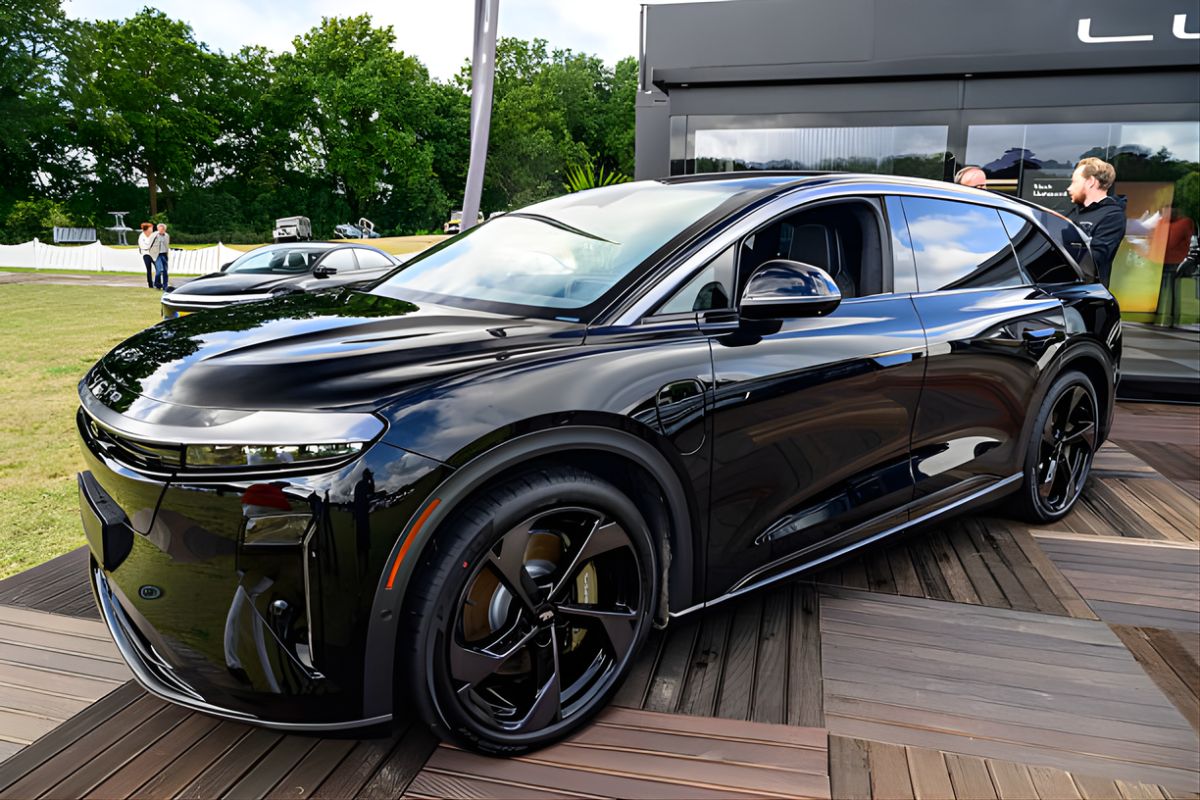
The Gravity needs to succeed. Lucid’s survival depends on it. The Air sedan is great, but it doesn’t sell enough to keep the company going. The Gravity targets the SUV market where buyers actually spend money. Three-row electric SUVs are hot right now.
Lucid’s betting the Gravity will eventually outsell the Air once cheaper trims arrive. The Grand Touring at $94,900 is expensive. The Touring trim at $79,900 should bring in more buyers.
They’re also working on a mid-size platform launching in late 2026. That vehicle will supposedly cost under $50,000. If Lucid can get a mainstream electric SUV to market at that price, they’ve got a real shot. But the Gravity needs to work first.
The Credibility Problem
This sales dispute isn’t about September numbers. It’s about credibility. Lucid’s trying to prove they can scale production and compete with established automakers. When third-party reports show single-digit deliveries, it destroys that narrative.
But Lucid’s making it worse by not releasing detailed sales data. If they’re confident in their numbers, why not publish monthly US deliveries like Ford or GM? Transparency would end these disputes immediately.
Lucid positioned itself as a Tesla competitor. When you’re comparing yourself to Tesla—which delivered 435,059 vehicles in Q3 2025 alone—people expect real volume. Lucid’s nowhere close to that scale.
What Lucid Gravity Sales 2025 Really Show
The Lucid Gravity sales data dispute will probably continue until Lucid either starts publishing monthly numbers or production ramps up enough that the discrepancies become obvious. Right now, nobody knows the truth.
Lucid’s Q3 earnings report came out in October and missed Wall Street’s expectations. The stock dropped again. Analysts are watching Q4 numbers closely to see if Gravity volume picks up. Benchmark thinks Lucid will deliver about 16,800 total vehicles in 2025, up 64% from 2024. That’s encouraging, but still far from earlier projections.
The Gravity is genuinely impressive. It’s got the range, power, space, and tech to compete. But making great cars isn’t enough if you can’t scale production and prove demand is real.
Lucid needs to stop fighting with data providers and start showing results. Until then, expect more monthly disputes where Motor Intelligence publishes estimates, Lucid calls them false, and everyone’s left confused. Not a good look for a company trying to prove it belongs with the big players.
Recommended