
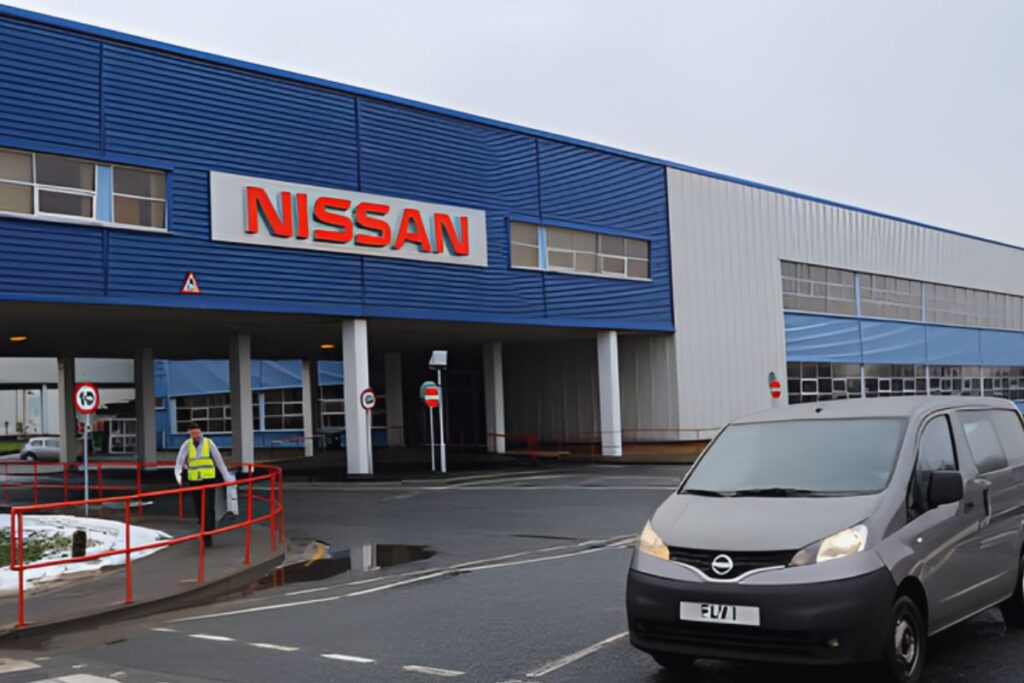
I mean, let me not pretend that I have mates on the Nissan production line or anything. But I know people who do. And at the moment, those are not easy talks.
Everyone knew the Nissan Sunderland factory job losses would become reality in late 2024. And we’re talking about maybe 3,000 jobs evaporating from what has been the Northeast’s manufacturing backbone for almost four decades. Yeah, three thousand. You can’t wave that number away with mutterings about “restructuring” or “market forces.”
The plant is located on Washington Road in Sunderland. Big sprawling thing that used to be farmland in the day. These days, it directly employs around 6,000 people. Do the maths yourself. Half the workforce is facing redundancy. And those are before you count the suppliers, the contractors, the cafe down the road that does bacon butties for all the early shift.
How We Got Here
Nissan’s been making cars in Sunderland since 1986. For years, it was brilliant. Politicians loved showing up for photo ops. The plant churned out Qashqais and Jukes by the boatload, shipping them across Europe and beyond. At its peak they were doing over 500,000 vehicles a year.
But things change, don’t they? Brexit happened. The car market shifted. And here’s the kicker: electric vehicles turned everything upside down.
The Nissan factory Sunderland’s job situation got properly dicey when the company said it was cutting global production by about 20 percent. That was November 2024. Sunderland wasn’t going to dodge that bullet. The parent company in Japan was bleeding money after years of declining sales and mounting costs. They needed to trim fat, and they needed to do it quickly.
So in December, confirmation came through. Three thousand roles would go by mid-2026. Mix of voluntary and compulsory ones. Management tried softening the blow by saying they’d support workers through the transition. Small comfort when you’ve got a mortgage and kids in school, innit?
What Electric Cars Have to Do With It
Here’s where it gets messy. Nissan announced a massive investment in electric vehicle production at Sunderland just a few years back. The Nissan Sunderland factory electric car launch was supposed to be the plant’s future. New battery facilities, new models, the works. They committed over £1 billion with government backing.
So why did Nissan cut jobs now? Building electric cars needs fewer people than traditional combustion engines. Simpler mechanics, different assembly processes. Plus, demand for EVs hasn’t exploded quite like everyone predicted. People are hesitant about them. Range anxiety’s real. Charging infrastructure is patchy across most of Britain. And let’s be honest, they’re still bloody expensive for most families trying to get by.
The plant’s shifting production. That takes time. And in the meantime, older models are being phased out faster than new ones ramp up. There’s a gap in the middle. Workers fall through it.
I remember chatting with someone whose brother-in-law worked in quality control there. Thirty years on the line. He’d been through ups and downs before, but nothing like this. The bloke was fifty-eight. Where do you go at that age when your entire skill set revolves around one factory? You can’t exactly retrain as a web designer or something daft like that.
The Ripple Effect
Think about Sunderland for a second. It’s not London, is it? Doesn’t have endless job opportunities around every corner. When Nissan sneezes, the whole region catches a cold.
The supply chain’s massive. Companies make seats, electronics, and paint. Logistics firms are hauling parts in and finished cars out. They’re all feeling it right now. Some reckon the actual economic impact could affect upwards of 10,000 jobs when you count everything downstream.
Local shops, pubs, and schools. They all depend on workers with steady wages coming in every month. Take away 3,000 reliable pay packets and watch what happens to the high street. It’s grim stuff.
And yeah, there’s anger. Of course there is. Government made big promises about protecting manufacturing post Brexit. Nissan got assurances, incentives, and public money. Now people are asking what it was all for if half the workforce gets binned anyway.
What Redundancy Actually Looks Like
The Nissan redundancy package details trickled out through union negotiations over the past few weeks. Can’t give you exact figures because they vary based on how long you’ve been there and what role you do. But industry standard in manufacturing usually runs about a week’s pay per year of service. Sometimes two if you’re lucky. Statutory minimum’s capped way lower, though, so anyone under forty without decades in work won’t see life-changing money.
Voluntary redundancy went first. Some older workers near retirement probably jumped at it. Get out with something in your pocket rather than waiting for compulsory cuts later. Can’t blame them really.
But younger staff? Different story entirely. Mortgages aren’t getting smaller, are they? Childcare costs aren’t dropping. You need to work. Retraining sounds great on paper until you’re actually trying to pivot careers at thirty-five with bills piling up and a family depending on you.
Also read: Nissan Frontier headlight recall
What Happens Next
Nissan says production will stabilise once the electric transition is complete. New models coming online by 2027. Maybe hiring picks back up then. Big maybe.
The Nissan Sunderland address at Washington Road isn’t going anywhere. The factory’s not closing. That’s the message they keep hammering home. Just smaller. Leaner. More automated. Fewer actual people doing the work.
Government’s thrown some support packages at affected workers. Retraining schemes, job placement services, that sort of thing. Whether it’s enough remains to be seen. Moving from assembly line work to healthcare or IT or whatever isn’t exactly straightforward. Different worlds entirely.
Local councils are scrambling to attract new investment. Diversify the economy before it’s too late. But that takes years, doesn’t it? People need jobs now, not in five years when some new factory might open.
The Bit Nobody Wants to Say
Manufacturing in Britain’s been on the slide for decades. Everyone knows it even if they don’t want to admit it. Nissan Sunderland was the exception that proved the rule. Now it’s just proving the rule like everywhere else.
Globalisation means carmakers can shift production anywhere. Cheaper labour in Eastern Europe or Asia. Closer to growing markets where people are actually buying new cars. Britain’s advantages have eroded over time. Even with electric vehicle investment, we’re competing with countries throwing billions at their auto industries.
And automation’s only accelerating. Fewer humans, more robots doing the work. That’s the trajectory we’re on. These 3,000 jobs probably won’t all come back, even if production increases down the line. The factory of tomorrow needs different workers. Fewer of them, too.
So what does that mean for communities built around manufacturing? Nobody really knows. We’re all sort of making it up as we go along and hoping for the best.
In the End
The Nissan Sunderland factory job losses aren’t just statistics on a spreadsheet; they’re real people’s lives. Their parents are wondering how to explain redundancy to their kids over dinner. They’re a couple arguing about whether to sell the house and move somewhere cheaper. Their entire lives are getting reshuffled because executives in Japan need to balance the books and keep shareholders happy.
It’s easy to talk about markets and competitiveness from a distance. It’s much harder when it’s your town. Your job. Your future is suddenly uncertain, and nobody can tell you what comes next.
Will Sunderland bounce back from this? Maybe it will. Will those 3,000 workers find something comparable? Some will manage it. Many won’t, if we’re being realistic.
Right now, all anyone can do is wait and see what comes next. Not exactly comforting, is it?
Recommended