
Picture this. A family sits around a kitchen table that’s seen everything. Birthdays. Rows. A dog that once stole a roast chicken. Now it’s covered in paperwork. Land deeds. Company accounts. Scribbled notes. Someone’s tea has gone cold again.
And the question hanging in the air isn’t sentimental. It’s practical.
If Mum or Dad dies after April 2026, does the family have to sell part of the farm or the business just to pay inheritance tax?
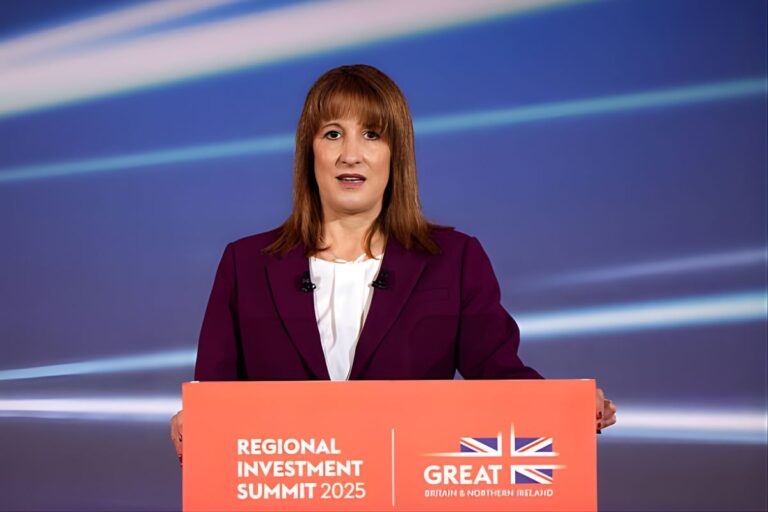
That’s why people keep searching for Rachel Reeves’ inheritance protection. They’re not looking for gossip. They’re looking for a lifeline.
Here’s the straight version. Rachel Reeves’ inheritance tax changes don’t “wipe out” inheritance planning. But they do tighten the rules that used to let certain farms and family businesses pass on with little or no inheritance tax bill. The big shift is a new cap on how much can get 100% relief under Agricultural Property Relief and Business Property Relief from 6 April 2026.
So if you’ve got land, a farm, or shares in a trading business, or you’re expecting to inherit them, this matters. A lot.
And yeah, it’s messy. Because the headline changed, too.
What Exactly Is Changing In April 2026?
For years, APR and BPR could remove the value of qualifying farm and business assets from the inheritance tax calculation. In plain English, families could pass on certain assets with 100% relief, meaning no inheritance tax on that part, as long as the rules were met.
From 6 April 2026, the government will restrict full 100% relief to the first £2.5 million of combined qualifying agricultural and business property.
Above that, qualifying assets will get 50% relief, which means an effective inheritance tax rate of up to 20% on the excess, instead of the standard 40%.
The policy has been debated hard, and it was originally discussed with a lower cap. But the government’s own guidance now sets out the £2.5 million figure as the headline allowance for full relief from April 2026.
Why This Feels Like “Protection” To Some And A Cut To Others
This is where it gets political, fast.
Supporters say the new allowance still protects most farms and family businesses because a large chunk can still pass tax-free, and anything above gets a reduced rate rather than the full 40%.
The government also says inheritance tax on the affected assets can be paid in ten annual instalments, and in some cases, this can be interest-free if paid on time.
Critics say it’s a real reduction in protection because the old system had no cap in the same way. If you had a big farm or a valuable long-term business, you could be looking at a tax bill that didn’t exist before, even if the business itself doesn’t throw off cash easily.
Both views can be true depending on the size and shape of the estate. That’s the annoying bit.
The Cap Is Only One Part Of The Story
A lot of people stop at “£2.5 million allowance” and think the rest is simple. It isn’t.
APR and BPR have their own rules about what qualifies and how. The UK Parliament briefing lays out that relief can be 50% or 100%, depending on the asset and the conditions. It also spells out the policy debate over who is likely to be affected.
So two estates that look similar on paper can end up treated very differently. That’s why any headline like “inheritance protection” can feel a bit cheeky. The detail is where the bill is.
The Bit That Helps Families More Than People Realise
Here’s the part that gets overlooked in panicked posts online.
The allowance for full relief is designed to be transferable between spouses or civil partners, so if one person dies without using their allowance, the survivor can potentially use it later. That can push the family’s full relief threshold higher, depending on how the estate is structured.
So a couple could potentially pass on a larger amount of qualifying farm or business assets with 100% relief than a single person. That doesn’t make the change painless. But it does mean the planning conversation for married couples is different to the conversation for someone widowed or single.
And yes, that’s still part of what people mean when they say ‘Rachel Reeves inheritance protection. It’s not always protection in the “more generous than before” sense. It’s protection in the “what’s still available if you plan properly” sense.
A Quick Word On Instalments And Why They Matter
Inheritance tax normally has that brutal vibe. Pay up quickly, or face problems.
But HMRC allows inheritance tax on certain assets, including land, to be paid in instalments over up to ten years in many cases. The government’s note on the April 2026 changes also highlights instalment payment and the idea that it can be interest-free if paid on time.
That sounds like a small technical thing. It isn’t.
If your estate is asset-rich but cash-light, instalments can be the difference between holding on to land and dumping it at the worst time. Still painful, but less sudden.
The “Seven Year Rule” Still Matters, But Watch The Rumours
People love to say the seven-year rule is “going”. It hasn’t, at least not as law.
In UK inheritance tax rules, gifts can fall outside the estate if you live for seven years after making them, under the usual potentially exempt transfer rules. The policy chatter about lifetime gifting caps comes and goes, but speculation isn’t legislation. As of now, the big confirmed April 2026 shift is centred on APR and BPR relief being capped and reduced above the allowance.
So if anyone tells you gifting rules have already changed, treat that like pub talk until you see it in an official update.
The Extra Twist: People Are Only Just Clocking
Here’s the unique angle most articles skip because it’s not as clicky.
These changes don’t just affect the wealthy. They affect families who run businesses that look big on paper because of asset values, not because of income.
Think about a business that owns its premises outright. Or a farm where land values have shot up over decades, even if yearly profit stays modest. Suddenly, a “paper-rich” estate crosses a threshold, even if nobody’s sitting on piles of cash.
That’s where planning becomes more about liquidity than tax theory. Not “how do we avoid tax” but “How do we avoid a forced sale?”
It’s also where honest conversations matter. Who actually wants to run the farm? Who actually wants to run the company? If the answer is “no one”, the tax bill isn’t the only issue. It’s just the one that makes the decision urgent.
What To Do If April 2026 Is Looming
Look, nobody wants to hear, “Speak to a professional.” But this is one of those areas where a wrong assumption can cost real money.
If you’re in the zone where these reliefs matter, the practical steps usually start with the basics:
- You check what assets might qualify for APR or BPR, based on HMRC guidance and the facts of your situation.
- You check the size of the estate and whether you’re likely to go above the £2.5 million full relief allowance for qualifying assets from April 2026.
- You check whether spousal transfer of the allowance could apply and what that means for the family plan.
And you look at liquidity plans, including instalments, because tax bills don’t care whether the business has spare cash.
None of that is glamorous. It’s the boring stuff that saves you.
A Small But Relevant January 2026 Political Note
This isn’t happening in a vacuum. Reeves has faced heavy pushback on several policies, and recent reporting has pointed to a pattern of reversals and amendments under pressure, including around inheritance tax for farmers.
That matters because inheritance tax policy can shift again. Not because anyone should bank on it, but because you shouldn’t assume today’s headlines are the final shape forever.
The Bottom Line
If you were hoping “inheritance protection” meant everything stays as it was, it doesn’t.
If you were worried it means every farm and every family business gets hammered, it doesn’t mean that either. The government’s own documents and Parliament’s briefing suggest the impact concentrates on a smaller slice of estates, but that slice can include families who don’t feel remotely wealthy day to day.
So the best way to think about Rachel Reeves’ inheritance protection is this.
Some protection remains. The rules just got tighter. The clock is ticking towards 6 April 2026. And if your plan is currently “hope for the best”, well… that’s not a plan, is it?
FAQ
Q. What Does “Rachel Reeves Inheritance Protection” Actually Mean?
A. Most people use it as shorthand for the April 2026 inheritance tax changes that cap Agricultural Property Relief and Business Property Relief, plus the remaining allowances that still protect a portion of qualifying assets from inheritance tax.
Q. When Do The Inheritance Tax Changes Start?
A. The key APR and BPR cap changes are set to take effect from 6 April 2026.
Q. How Much Can You Still Pass On With 100% Relief?
A. From April 2026, full 100% relief will apply to the first £2.5 million of combined qualifying agricultural and business property, with 50% relief above that.
Q. What Tax Rate Applies Above The Allowance?
A. Above the allowance, qualifying assets get 50% relief, which can mean an effective inheritance tax rate of up to 20% on that excess value.
Q. Can the Tax Be Paid Over Time?
A. In many cases, inheritance tax on certain assets can be paid in ten annual instalments, and the government has highlighted instalment payment as part of how the April 2026 change works for affected estates.
Sources and References
- GOV.UK (Policy Paper): Reforms to Agricultural Property Relief and Business Property Relief. Essential for the technical breakdown of the £2.5 million allowance and the interest-free instalment rules starting April 2026.
- HM Treasury News (Dec 2025): Inheritance tax reliefs threshold to rise to £2.5m for farmers and businesses. The official announcement of the “Headline Change” where the cap was increased and made transferable between spouses.
- HMRC Manual: How Inheritance Tax works: Rules on giving gifts. The primary source for verifying that the “7-year rule” and “Taper Relief” remain as current legislation.
- UK Parliament Research Briefing (Jan 2026): Changes to agricultural and business property reliefs for inheritance tax. A non-partisan deep dive into the policy debate and the specific impact on different estate sizes.
- NFU Online (Industry View): Family farm tax: NFU analysis of 2026 reforms. Provides the perspective from the farming community on how the 20% effective tax rate impacts food security and rural business.
- The Association of Taxation Technicians (ATT): Transferable IHT allowance: What it means for family businesses. A clear explanation of how the spousal transfer “double-up” works in practice for planning.
Recommended