
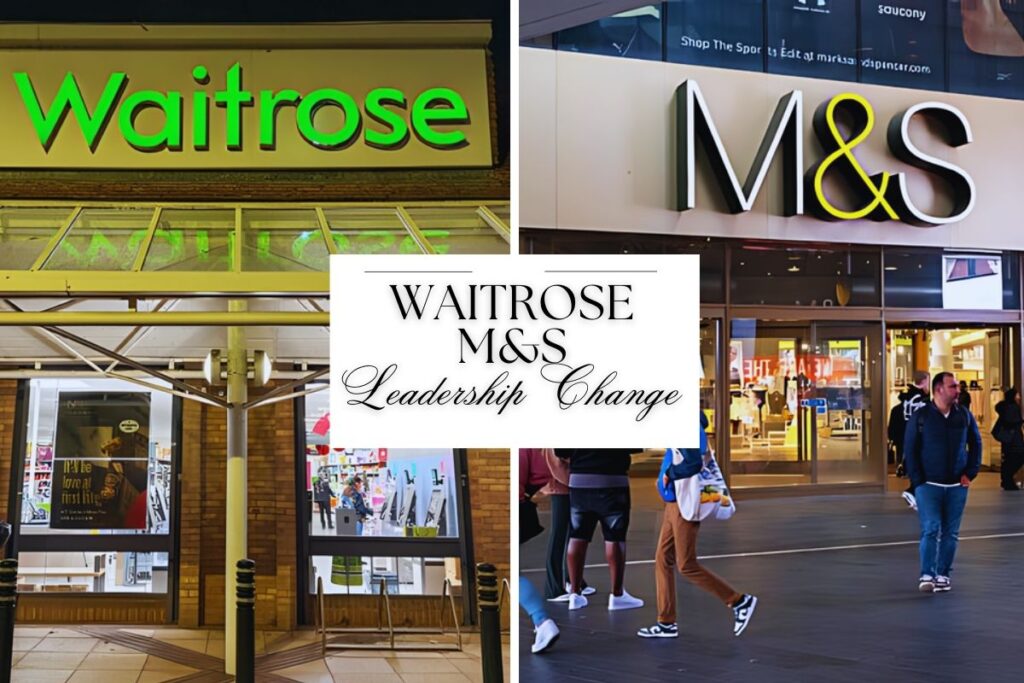
The grocery aisles of middle England have always been a battlefield, but right now, the real war isn’t over the price of sourdough or the ripeness of an avocado. It’s happening behind the scenes, in the server rooms and C-suites. As of late January 2026, we’re witnessing a seismic Waitrose M&S tech leadership change that’s essentially a high-stakes game of musical chairs—except the music has stopped, and some of the biggest players in the industry are scrambling for a seat.
The M&S Departure: A House Still Shaking
If you’ve been following the business pages this week, you’ll know the atmosphere at Marks & Spencer is, shall we say, a bit “crisp”. On January 20, news broke via Sky News and Reuters that Josie Smith, the Chief Technology Officer, is packing her bags. She’s only been in the post for 18 months. Now, in the world of corporate retail, an 18-month stint is usually a sign that something has gone pear-shaped.
And we know exactly what that “something” was.
Back in April 2025, M&S was hit by a crippling cyberattack that didn’t just tickle their systems; it floored them. It was a ransomware hit, reportedly linked to the “Scattered Spider” group, and the fallout was messy. Online orders stopped. Click-and-collect went dark. For a business that’s been screaming about its “Digital First” strategy and its billion-pound partnership with Ocado, it was the ultimate humiliation.
Here’s the part that really stings: it wasn’t some high-tech, “Mission Impossible”-style hack. It was a classic case of social engineering. The attackers literally called up the IT helpdesk, which was run by a third-party contractor and tricked a staff member into resetting a password. A simple human error on a phone call gave them the keys to the kingdom. It proves that all the cutting-edge firewalls in the world don’t mean a thing if someone on the other end of a phone is too helpful for their own good.
I’ve talked to folks in the industry who say the “long tail” of that hack is still wagging. Even in the recent January 8 trading update, while food sales were up 5.6%, clothing and home took a nearly 3% dip. M&S blamed “reduced footfall”, but analysts are whispering that the backend stock systems are still feeling the ghost of that 2025 breach.
Josie Smith’s exit follows that of Rachel Higham, the former Chief Digital and Technology Officer, who left four months ago to advise a cybersecurity firm. It’s like a complete clearing of the decks. Darren Gibson has been appointed the new transformation director to steady the ship, but let’s be honest, he is going to a kitchen that still smells a bit smoky after the fire.
Waitrose: The Tesco Invasion
While M&S is playing defence, Waitrose and the John Lewis Partnership (JLP) are going on a serious offensive. And they’re doing it by raiding the competition.
Earlier this month, Tom Denyard officially took the reins as the new Managing Director of Waitrose. If that name sounds familiar, it’s because he’s the man who was running Tesco Online. Hiring a Tesco heavyweight to lead Waitrose is a massive statement of intent from JLP Chairman Jason Tarry (himself a former Tesco man).
This is more significant than a few “Tesco-ites” finding new homes; this is the full-on “Tesco-ification” of Waitrose. In raiding the competition, the Partnership isn’t just hiring suits; they’re poaching the architects of the UK’s most dominant online grocery machine. Now they’re importing that “ruthless efficiency” DNA to try and rescue a brand which has consistently put politeness before profit.
It’s clear what’s happening here. Waitrose is tired of being the “posh but slow” sibling in the digital race. They’ve watched M&S claw their way up to a 4.5% market share, finally matching Waitrose. To put that in perspective for you: it’s the first time in history that M&S has managed to catch their rival. For decades, Waitrose sat comfortably on that upmarket throne, but that gap has officially closed. The Waitrose M&S tech leadership change isn’t just about personnel; it’s a battle for the soul of the premium shopper.
Denyard isn’t alone in this transition. He’s joined by Simon Fulford, who was recently bumped up to lead Change Delivery and Tech. They’re working under CIO David Hunn, who is currently midway through a massive migration to Google Cloud with the help of Wipro.
The goal? A £900 million productivity target by 2028. They want to use AI-driven recipes and hyper-personalised “MyWaitrose” offers to make sure you never even think about stepping into an M&S Foodhall.
The Leadership Comparison Table
| Feature | Marks & Spencer (M&S) | Waitrose (John Lewis Partnership) |
| Current Strategy | Recovery & Trust: Rebuilding after the 2025 Scattered Spider breach. |
Offensive Reinvention: The “Tesco-ification” of premium retail. |
| Top Tech Executive | Darren Gibson (Transformation Director/Interim) |
David Hunn (Chief Information Officer) |
| New Power Player | Matt Featherstone (Head of Business Improvement/Ex-Asda) |
Tom Denyard (Managing Director/Ex-Tesco Online) |
| Key Execution Lead | Currently Vacant (Following Josie Smith’s exit) |
Simon Fulford (Head of Change Delivery & Tech) |
| Primary Tech Partner | Ocado Retail (Online Partnership) |
Wipro & Google Cloud (Infrastructure) |
| Major Goal | Stabilising legacy systems & Sparks app growth. | £900m productivity target & AI-driven recipes. |
The Great Tech Divide: Recovery vs. Reinvention
Here is the part that really sticks in my mind. We have two iconic British brands at completely different stages of their digital journey.
M&S is in “recovery mode“. They’ve got the sales momentum in food, but their tech foundations were proven to be built on sand during that April hack. They’re now looking for a leader who can provide “a steady hand and a calm head,” as their internal memos put it. They need someone to convince the board that their data is actually safe.
Waitrose, on the other hand, is in “reinvention mode”. They’ve had a few years of stagnant growth, and they’ve finally decided that being “nice” isn’t a business strategy. They’ve brought in the “Tesco Tech” mindset to sharpen their edges. They’re betting the farm on this Google Cloud migration to fix their supply chain, the very thing that caused M&S so much grief last year.
The View from the Checkout
So, what does this mean for us, the people actually pushing the trolleys?
Honestly, it means your shopping experience is about to get a lot more “personal”, whether you like it or not. Expect the M&S Sparks app to get even more aggressive with its offers as it tries to win back the trust it lost during the data breach. On the flip side, watch for Waitrose to become much more “efficient”. If Denyard brings the Tesco playbook to the Valleys, we’ll see faster deliveries and fewer “out of stock” signs on the high-end essentials.
The stakes couldn’t be higher. In 2026, a grocery store isn’t just a place that sells milk and bread; it’s a data company that happens to have a fridge.
M&S has shown us what happens when that data company fails. Waitrose is trying to show us what happens when it succeeds. It’s a fascinating, slightly terrifying watch. One thing’s for sure: the person who eventually takes the top tech job at M&S has one hell of a “to-do” list waiting for them on Monday morning.
Anyway, that’s where things stand. It’s messy, it’s costly, and it’s quintessentially British. I’ll be following whether these new leaders actually deliver, or we will end up discussing yet another “leadership transition” in a year.
What do you think? S,o are you a brand loyalist or do you go wherever the app tells you that’s where the best voucher is?
Sources and References
- John Lewis Partnership (September 2, 2025): Official Appointment of Tom Denyard as Managing Director of Waitrose.
- Grocery Gazette (August 7, 2025): Simon Fulford appointed Head of Change Delivery & Technology at JLP.
- Sky News / Reuters (January 20, 2026): Reports on the departure of Mike McShane and Josie Smith from Marks & Spencer.
- Retail Gazette (January 8, 2026): M&S Christmas Trading Update: Food sales up 5.6%, Clothing & Home down 2.9%.
- The Hacker News (June 21, 2025): Scattered Spider linked to M&S and Co-op Ransomware Attacks.
- Vorboss Breach Analysis (August 2025): Detailed breakdown of the Scattered Spider social engineering tactics used against M&S.
- BlackFog (2025): Operational fallout of the M&S breach: The transition to manual “pen and paper” systems.
- Wipro Newsroom (August 22, 2024): Wipro and John Lewis Partnership extend Cloud Transformation partnership for X86 migration.
- Google Cloud Press (August 9, 2023): JLP signs £100m strategic agreement with Google Cloud for AI and Machine Learning integration.
Recommended