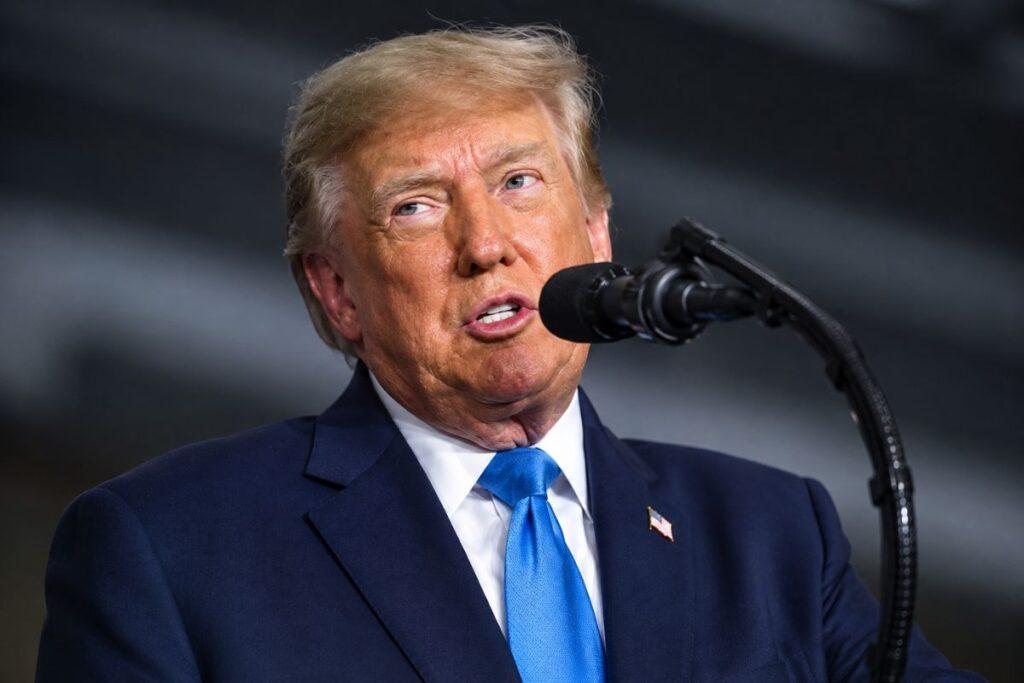
President Donald Trump has sought to calm the political storm created by his “let them take out Los Angeles” remark, saying the United States will not allow Iran to strike American cities. His clarification came after California leaders accused him of treating Los Angeles and San Diego as expendable in the conflict with Iran.
- Trump clarified that the U.S. will not allow Iran to strike Los Angeles or San Diego.
- His original Nebraska rally comment said Iran could “take out” the two cities and called it a “small price to pay.”
- The White House says Trump was warning about the threat from a nuclear Iran, not inviting an attack.
- California Governor Gavin Newsom and the mayors of Los Angeles and San Diego strongly condemned the remarks.
- Trump also argued that higher oil prices are a temporary cost of preventing Iran from obtaining nuclear weapons.
What Trump Said Now
Speaking at a rally in Texas on Wednesday, Trump returned to the controversy while discussing the economic impact of the Iran war. He said the country would face “trauma” if Iran were able to launch a missile at San Diego or Los Angeles, but immediately added: “We’re not going to let that happen. We protect our cities, we protect our country.”
Trump framed the remark as a warning about what could happen if Iran acquired nuclear weapons, rather than an endorsement of an attack on U.S. soil. He said his administration was working to ensure that Iran would “never have a nuclear weapon,” while arguing that a temporary rise in oil prices was a smaller cost than allowing Tehran to gain that capability.
The president also repeated his claim that the United States would soon be “out of there” and that oil prices would “come down like a rock.” He presented the war’s economic burden as temporary, even as critics continued to question the human and strategic risks of the conflict.
The Original Comment
The controversy began on Monday night at a rally in Nebraska. While defending the cost of the Iran war, Trump said fuel-price increases were “just artificial” and “a little bit high,” before shifting to the possibility of an Iranian attack.
“They can take out a city,” Trump told the crowd. “Let them take out Los Angeles. Let them take out San Diego.” He then described the potential loss as “a very small price to pay” in the broader effort to keep the country safe.
The wording immediately drew attention because it appeared to suggest that an Iranian strike on two major American cities could be acceptable. Supporters and the White House argued that Trump was describing the danger posed by a nuclear Iran; critics said the language was reckless and could be interpreted as inviting an attack.
Why the Remark Matters
Los Angeles and San Diego are not ordinary political examples. Los Angeles is the second-largest city in the United States, while San Diego is home to major military installations and serves as a critical naval hub on the Pacific coast. That is why California officials reacted so strongly to the president’s words.
A missile strike or any large-scale attack on either city would carry enormous civilian, economic and military consequences. The concern was not only the literal wording, but the message it could send to foreign governments, extremist groups and Americans already anxious about the war.
Trump’s clarification attempts to remove that ambiguity. Still, the episode shows how a president’s language during a war can become a major political issue when it involves U.S. cities, civilian safety and the possibility of foreign retaliation.
White House Defence
White House Communications Director Steven Cheung rejected claims that Trump wanted Iran to attack California. He said the president was “clearly stating U.S. cities would have been threatened if a nuclear Iran hadn’t been stopped,” adding that “America is safer because of the President.”
Cheung also said the media reaction was “not rooted in reality” and argued that Iran had “no nuclear, no navy, no air force, and no money.” The White House position is that Trump was making a case for preventing Iran from becoming a nuclear power, not proposing that American cities be sacrificed.
That explanation may satisfy Trump’s supporters, but it has not ended the criticism. The central issue is that the president used extreme language about American cities during a live political rally, leaving room for different interpretations.
California’s Response
California Governor Gavin Newsom was among the first and sharpest critics. He said Trump was suggesting that foreign enemies should “take out” Los Angeles and San Diego, calling the president “deranged and dangerous.”
In a later post, Newsom described the remarks as “dangerous—if not treasonous” and said they put a target on two of California’s biggest cities and one of America’s largest naval hubs. He said he had directed the State Threat Assessment Centre to monitor the situation in case foreign actors interpreted Trump’s comments as an invitation to target California.
Los Angeles Mayor Karen Bass also condemned the remarks. She said Trump had suggested that a foreign government attack Los Angeles and argued that a president’s role is to protect the country, not encourage attacks on American lives.
San Diego Mayor Todd Gloria pushed back in equally direct terms. “San Diego is not collateral damage,” he wrote. “We are not expendable. And we are never a ‘small price to pay.’”
Trump’s Oil-Price Argument
Trump’s clarification also focused on gasoline prices, an issue that has become central to the political debate over the Iran war. He argued that Americans may need to pay “a little more” for oil in the short term to prevent Iran from obtaining nuclear weapons.
His message was straightforward: the war may create short-term economic pain, but allowing a nuclear Iran would create far greater danger. He suggested that the alternative—an Iran capable of threatening U.S. cities—would leave the country in “freefall.”
That argument is likely to resonate with voters who see the conflict as a necessary security measure. But it may not satisfy households dealing with higher fuel costs, especially if the war continues longer than the president expects.
Political Fallout
The controversy has become another flashpoint between Trump and Democratic leaders in California. Newsom’s response turned a rally comment into a statewide security and political issue, while the mayors of Los Angeles and San Diego made clear that their cities would not accept being used as rhetorical examples.
For Trump, the episode highlights a familiar pattern: a provocative remark draws intense criticism, his team says the comment was misunderstood, and the president later offers a clarification that partially walks back the sharpest interpretation. In this case, his statement that the U.S. will “not let that happen” is a clear effort to reassure Americans that no U.S. city will be left exposed.
The political risk remains, however. Voters may accept the argument that Iran must be stopped from obtaining nuclear weapons, while still objecting to language that appears to minimise the value of American lives in Los Angeles and San Diego.
What Happens Next
The immediate question is whether Trump’s clarification will reduce the backlash or simply keep the story alive. California officials have already raised concerns about foreign actors misreading the president’s words, and the State Threat Assessment Centre’s monitoring order signals that the state is treating the matter seriously.
The larger issue is the Iran war itself. Trump continues to argue that preventing a nuclear Iran justifies the conflict and its economic costs, while opponents question both the strategy and the president’s language about potential attacks on U.S. soil.
For now, Trump’s message is clear: he says the United States will protect Los Angeles, San Diego and every other American city. Whether that reassurance repairs the damage from his earlier comments will depend on how voters, California leaders and international observers interpret both his words and his administration’s actions.
Sources
- Forbes — Trump Clarifies ‘Let Them Hit Los Angeles’ Iran War Comment—Says He Won’t ‘Let That Happen’
- NBC Los Angeles — Trump says ‘we protect our cities’ after saying Iran could ‘take out’ Los Angeles or San Diego
- CNN— Trump tries to clarify Iran remarks about Los Angeles and San Diego
- CNN — Trump draws backlash after he suggests Iran could ‘take out’ Los Angeles or San Diego
- KESQ — Trump’s comment that Iran could ‘take out’ LA, SD draws criticism from leaders