
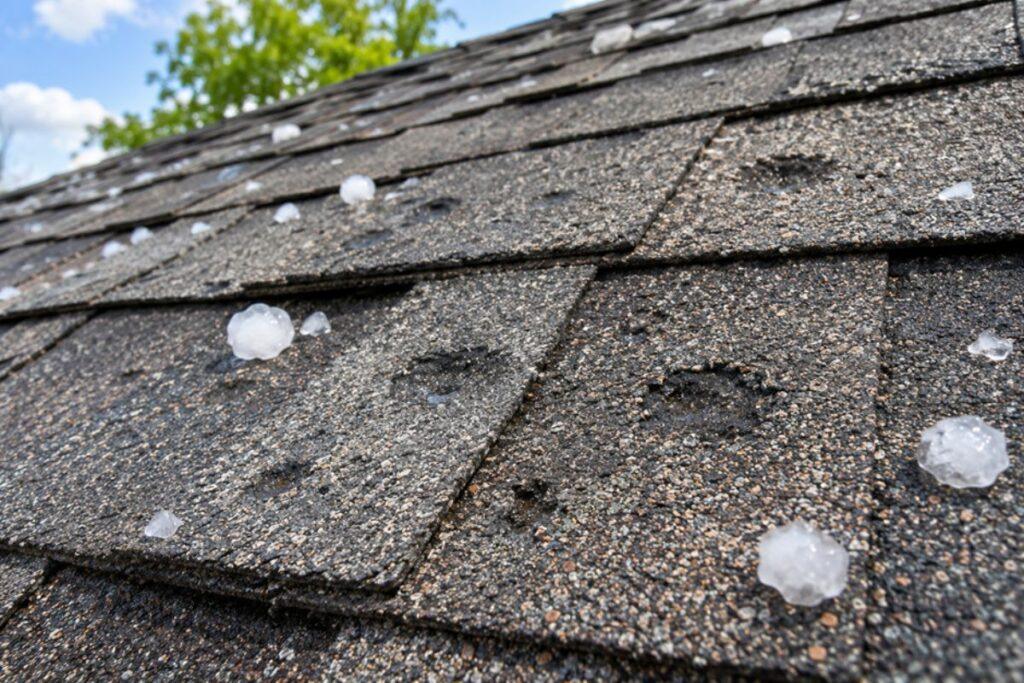
Driveway hail ground damage may seem very minor. The gutters are still there, tiles look great, and there are no damp areas on the ceiling. But a few heavy blows may fracture a tile or damage the waterproofing surrounding a roof vent. These minor weaknesses may not show up until the next major storm reveals them.
Hail normally does not cause equal damage to all portions of a roof. One slope might be battered hard by a storm while another is well protected. The extent of the damage relies on the wind direction, the size of the hailstones, and the state of the roofing materials.
Why Hail Damage Often Goes Unnoticed Until Leaks Develop
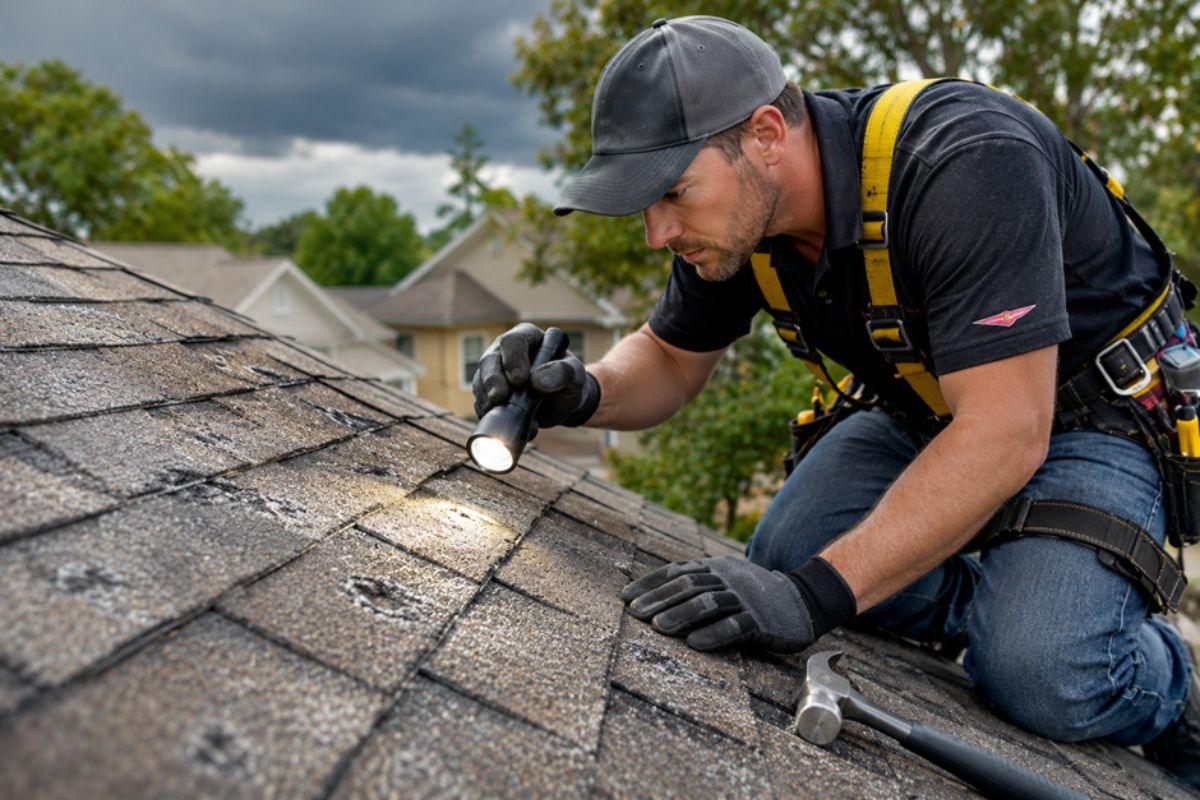
The tile may fracture but not shatter (a hairline crack).
Missing guard granules at an impact site on asphalt shingles. You can harm a sheet of metal without punching a hole in it immediately.
It may not always rain immediately on a damaged area. A little aperture will remain dry in a gentle rain, but will let water in when the wind drives rain under the cover.
Weeks later, the first sign might be a small spot on the ceiling. Moisture may have penetrated wood or insulation under the roof by then.
The roof might be damaged, but the ceiling may remain dry after a storm.
Signs of Hail Damage on Different Roof Types
Different roofing materials react differently to hail impact. Homeowners, however, may know what to look for to spot unusual changes without having to climb on the roof.
- Asphalt shingle.
Hail may knock granules off the top of the shingles, leaving darker spots where the protective covering has worn off. Larger impacts might break or destroy the material underneath.
Another indicator is the particulates in the drains. Just because you see some granules after a storm doesn’t mean you have hail damage. Some granule loss is normal as shingles mature.
- Concrete and clay tiles.
Hard impacts may damage the edges of tiles and fracture the surface. Even a damaged tile may fit neatly between the tiles next to it, making the problem impossible to spot from below.
Check for broken corners, pieces that have shifted. Even a break and moisture might get under the roof covering.
- RoofMetal roof
The hail may be quite severe and is known to shatter metal sheets. If the seams and covering are intact, they may be cosmetic ones.
- Metal Roof Roofing
The hail may be quite violent and fracture metal sheets. If the seams and covering are still intact, they may be cosmetic.
Heavy impacts may damage coatings and deform joints, destroying the fasteners. Water creeping up around a seam or anything like that, they are concerns that should be looked at by an expert.
- Slate Roof Tiles.
Natural slate may be damaged or destroyed by huge hailstones. Broken parts might drop down from the roof or become stuck in the gutters.
Slate will weather and a roofer should know fresh impact damage from existing wear and tear when suggesting repairs.
Hidden Hail Damage to Roof Components
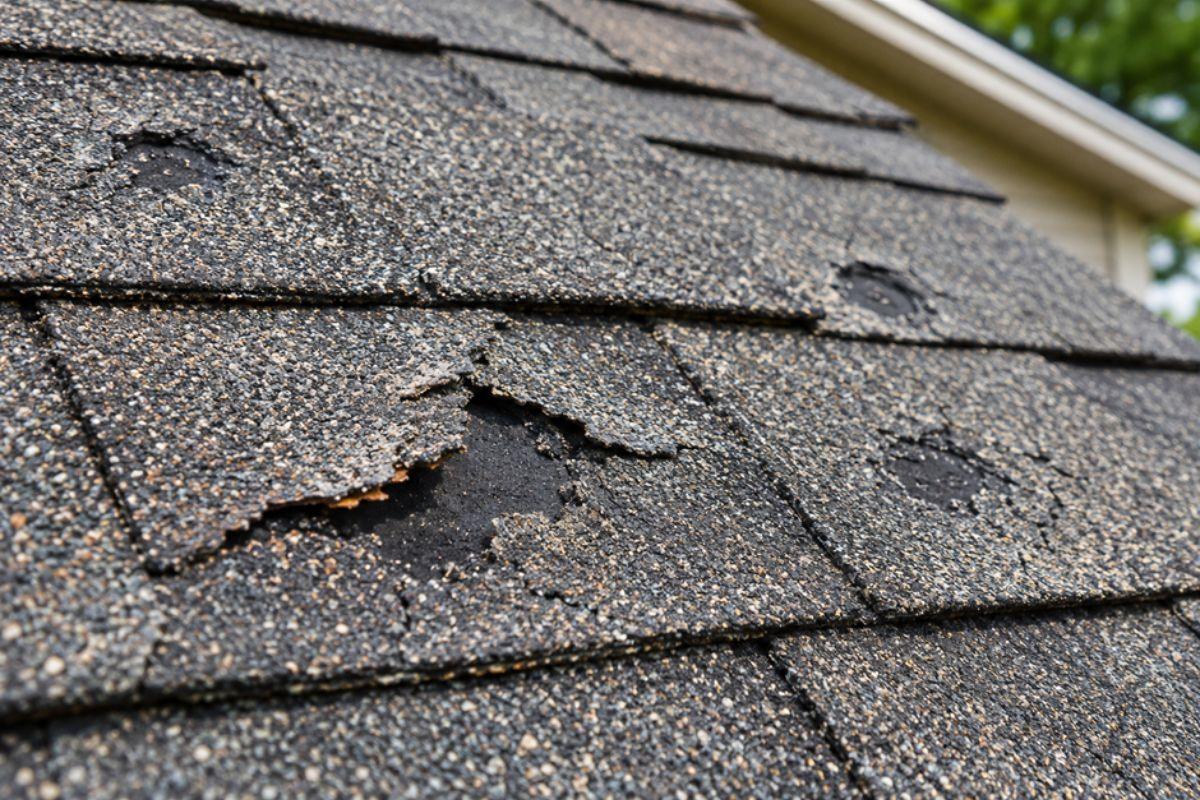
The weatherproofing technique is not confined to the main roof covering. Water must also be cleared from chimneys, vents, gutters and roof openings. There should be valid reasons to get genuine Rooflights to avoid the chaos.
The flashing of metal is very important. They are thin bands that restrict the joining of rainwater at the meeting of several surfaces. Hail may break lights or break a weak connection. There might be a small opening under the cover that would allow water to get in before it gets in.
Other components to look out for include:
- Gutters involving dings, loose brackets or roof debris.
- Roof vents being cracked coverings, missing fittings or broken seals.
- Raised edges and gaps between the chimney and roof Chimney flashing
- Ridge tops with unfastened protective covers or damaged roof tiles.
- Roof underlay having deterioration from rips or water visible only to the professional.
- Roof windows require greater attention after a strong storm.
Glass, frames and weather-resistant seals on windows and doors may be damaged by hail. You may also have problems with the waterproofing where the rooflight meets the frame and the upstand surrounding the rooflight.
We often observe fractured glass from the inside. Broken flashing is hard to notice. Water may run along the roof structure a little before it seeps in and stains it.
How to Safely Inspect Your Roof After a Hailstorm
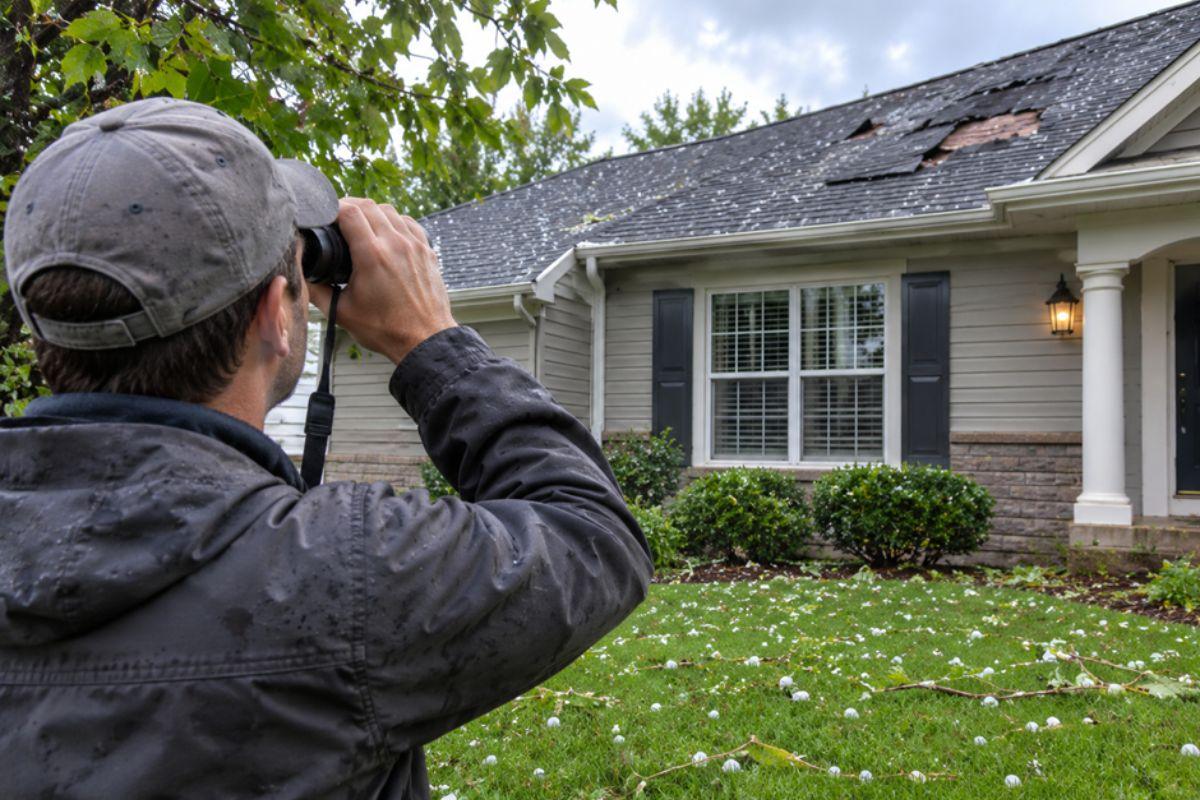
Earth is the best view. Wet tiles, unsecured things, and slippery ladders make a roof a more dangerous location in bad weather.
Most homeowners acquire the information they need without ever leaving their sofa.
Look around your house for damaged tiles on the grass, broken guttering or dents to metal surfaces. It also damage dumpsters, garden furniture, and automobiles parked outside.
You could get a peek of some of the places:
- Check the driveway and yard for roof debris that may have fallen.
- Stay away from the destruction. Take pictures from a safe distance.
- Look at the top of ceilings and walls for signs of fresh water.
- Look for wet spots in accessible parts of the loft, but do not walk on the solid floor.
- Keep track of the date of the storm and any changes you observe thereafter that were unexpected.
An excellent pair of binoculars will allow you to view the distant reaches of the roof. A zoom camera may also highlight damage that may be hard to see from below.
If it has a musty scent or smell of dark wood, the loft may be moist. Now, these signs don’t necessarily suggest that this is a widespread issue. In older structures, sometimes condensation and leaks are the same thing.
Check the leak area for damaged electrical components. If you do see water on the wires, however, call a professional immediately.
It would be nice to know these things from now on.
Fast-tracking a roofer’s employment and submitting an insurance claim
If you see water stains or damaged materials on the outside of your house from storm damage, you’ll want to have a professional come out and assess your roof.
Professional roofers can reach dangerous places from below. If there are still problems, we need to check the roof, if the roof can hold water, if more work is needed.
When to Contact a Roofing Professional and File an Insurance Claim
Insurance coverage. Some are caused by abrupt calamities, not age or neglect. How many deductibles are there? Before you undertake any substantial repairs, check with your insurer about filing an insurance claim. You may need to hurry to stop the water. You may use pictures. Save your receipts.
Free roof inspections? Never trust them. You will lose nothing except your integrity.
Conclusion
Hail damage is more than just a hole in your roof. There’s a storm coming. Tragedy was close. A broken seal You may smash the tile. A professional inspection may help find issues early that may save you money in repairs. Check roof coverings and storm skylights. Check for damage.