

Quick Answer: For the year 2026, the most economical cities in Spain for digital nomads will be Granada, Lugo, Cáceres, Murcia, Almería, Alicante, Las Palmas, Gijón, Sevilla, and Valencia, with monthly rents of €900-€1,800. However, out of this list, Lugo and Cáceres will take the lowest end of this spectrum by renting out apartments at €450 per month.
It is easy to understand why there would be such a difference when we consider the situation in Madrid and Barcelona, where renting a one-bedroom apartment costs over €2,500 per month.
I’ve watched too many people plan a move around Madrid or Barcelona because those are the only two cities anyone talks about, then quietly panic three weeks in once the rent hits their account. That’s really the whole reason this list exists. Spain isn’t one price. It’s ten different budgets wearing the same passport stamp.
So below is the real breakdown: what rent actually runs in each city, what a full month costs once you add food and everything else, and whether the internet holds up enough to actually work from there. No filler, no “hidden gem” nonsense. Just the numbers, city by city
- Granada, Lugo, Cáceres, Murcia, Almería, Alicante, Las Palmas, Gijón, Seville, and Valencia are the cheapest cities in Spain for remote workers right now.
- Expect €900–€1,800 a month in these cities, roughly half of what you’d pay in Madrid or Barcelona.
- Lugo and Cáceres come out cheapest overall, with rent starting around €450.
- Almería is the pick if you want beach access without beach-city prices.
- The Spain Digital Nomad Visa requires proof of income near €2,849 a month, and yes, you actually need it.
- Even the small towns have solid internet. 300 Mbps to 1 Gbps is normal here, not some lucky exception.
Who This Guide Is For
This guide is written for US and UK remote employees, freelancers, and Spain Digital Nomad Visa applicants planning a move in 2026.
It’s best suited for tech, creative, and consulting professionals with verifiable remote income (contracts, invoices, or pay stubs) — since that’s exactly what the visa application requires.
Use this guide to shortlist an affordable city, estimate your real monthly budget, and confirm visa income requirements before you sign a lease or submit your application.
Why Not Just Move to Madrid or Barcelona?
Nothing wrong with wanting the big-city version of Spain. Both cities are stunning, and it’s easy to see why they’re everyone’s first pick. But the math doesn’t work for most remote workers anymore.
A decent one-bedroom near central Barcelona runs past €1,600 a month now. That’s before groceries, transit, or a single night out. Drive an hour outside either city, though, and you get the same fast internet, the same tapas culture, the same 300 days of sun down south, for close to half the price. Somebody’s paying for the view in Barcelona. It doesn’t have to be you.
The 10 Cheapest Cities in Spain for Remote Workers
1. Granada — Best Overall Value

Mountains on one side, centuries of Moorish history baked into the streets, and one of the youngest populations in Spain thanks to the university crowd. Order a beer at almost any bar here and they’ll hand you a free tapa with it. Doesn’t sound like much until you realise you haven’t technically paid for lunch in three days.
- Monthly cost: €1,100–€1,400
- Rent: €500–€700
- Good for: anyone who wants nightlife and culture without the city-price tag attached to it
Also read: Things to Do in Belfast That Are Actually Worth Your Time
2. Lugo — The Cheapest City in Spain, Full Stop

Galicia, rainy, green, enclosed in its ancient Roman wall from 2,000 years ago. Lugo is unassuming and modest, and certainly not seeking to draw any attention to itself. Consistently, throughout the years, it has been cheap. From groceries to rents to going out for a meal, everything falls below average prices.
- Monthly cost: €900–€1,100
- Rent: €450–€600
- Good for: stretching every euro further than nightlife matters to you
3. Cáceres — Quiet, Old, and Weirdly Underrated

Caceres is not known to most Americans, and it is this fact that makes it all the more interesting. It has cobblestone streets, medieval-looking stone buildings dating back to the 15th century, and no crowd like you would see in Seville. Costs remain relatively cheap for everything here.
- Monthly cost: €950–€1,150
- Rent: €450–€620
- Good for: people who want slow living and don’t mind skipping the crowds
4. Murcia — Sun Without the Coastal Markup

With more than 300 sunny days every year, but without being charged for this like any proper coastal resort would. This is because Murcia lies near one of the largest farming areas of Spain, meaning that food will be fresher and cheaper here than anywhere else in the country.
- Monthly cost: €1,100–€1,350
- Rent: €500–€700
- Good for: warm weather without paying coastal prices for it
Also read: How Some Cambridge Families Plan Their Weekends Around the River
5. Almería — Cheapest Coastal City on the Mainland

Want to live near the actual Mediterranean without paying Alicante or Valencia rents? This is it. Dry, warm weather sticks around most of the year, and Almería is the least expensive coastal city on mainland Spain, not by a small margin either.
- Monthly cost: €1,050–€1,300
- Rent: €500–€680
- Good for: beach access on a budget that doesn’t stretch
6. Alicante — Easiest City for Getting Around
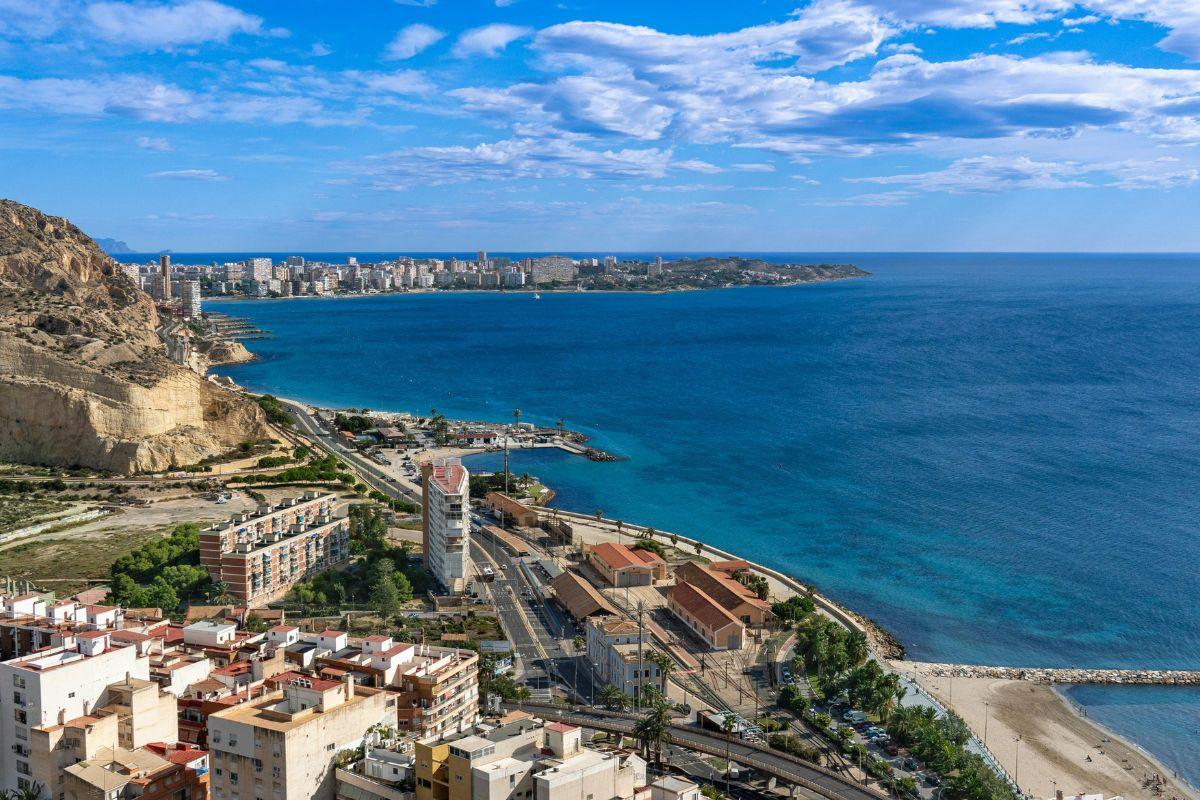
Americans find Alicante hard to resist when they move abroad, and once there, it is easy to understand why. With beaches, an international airport nearby, and affordable rent, Alicante certainly seems worth the trip. Not to mention the expat community, which is well established enough to make the initial period a breeze.
- Monthly cost: €1,200–€1,500
- Rent: €600–€800
- Good for: frequent travellers who want easy flight access
7. Las Palmas — Spring Weather, Basically Every Month

Situated in the Canary Islands in Gran Canaria, Las Palmas hardly feels any change of the season, being quite moderate all throughout the year, rarely having extreme weather conditions either way. The local taxes are also somewhat lower compared to those on the continent, making life quite affordable there.
- Monthly cost: €1,300–€1,600
- Rent: €650–€850
- Good for: anyone chasing consistent, mild weather without the seasonal swings
8. Gijon — For Anyone Who Hates Summer Heat
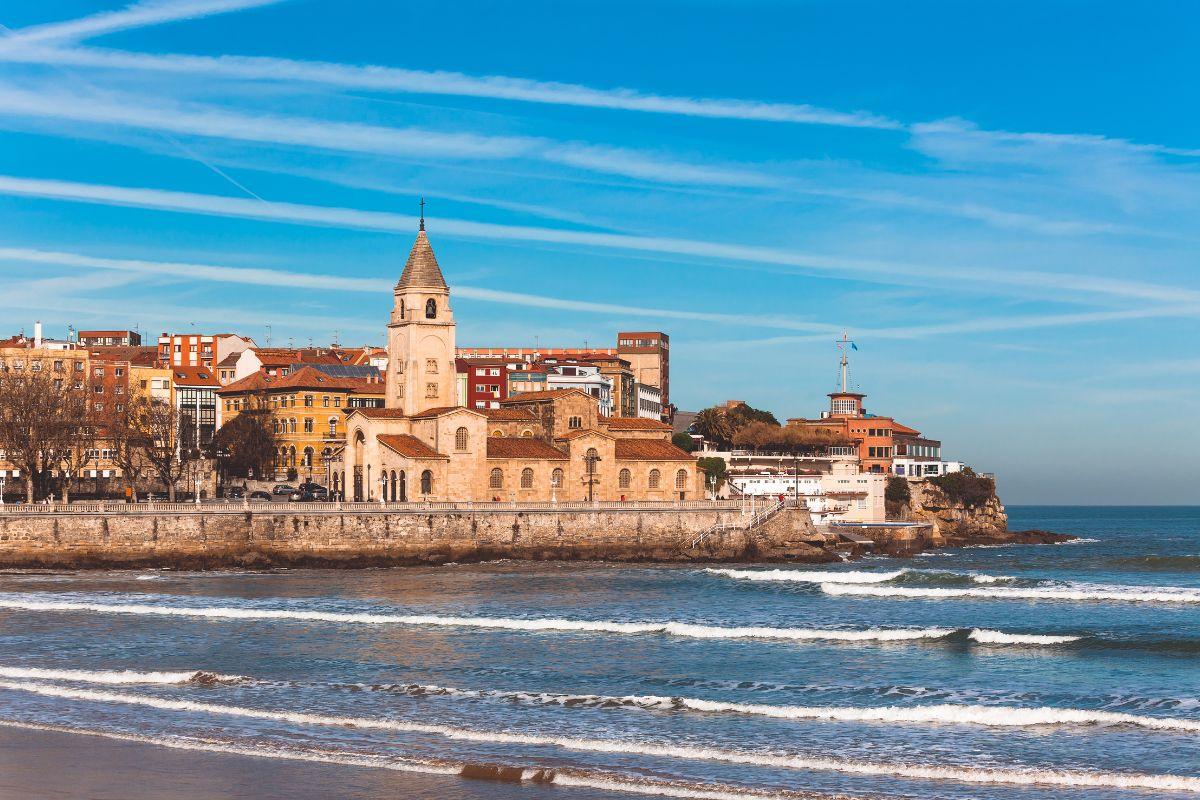
As Gijon lies on the northern Spanish coast, you will enjoy beautiful views of the sea and won’t have to endure those scorching temperatures which you would have to endure if you were to travel to other parts of Spain.
- Monthly cost: €1,150–€1,450
- Rent: €550–€750
- Good for: cooler climates and a slower, more laid-back coastal pace
9. Seville — All the Culture, a Third Less of the Cost

There are flamenco performances, orange trees along every plaza, and Spanish culture in its Andalusian flavour in full form. It is offered at about 35% off from what you would pay in Madrid. It is still a major city in all respects, only without the silent sapping of your account.
- Monthly cost: €1,200–€1,600
- Rent: €600–€850
- Good for: city energy without giving up culture or history
10. Valencia — Big City, Noticeably Smaller Bill

Spain’s third-largest city, and it acts like it: a massive beach, sprawling green parks, public transit that actually runs on time. It costs more than the smaller towns on this list, no getting around that, but it’s still nowhere close to Barcelona prices.
- Monthly cost: €1,400–€1,800
- Rent: €750–€1,000
- Good for: anyone who wants real big-city life without the big-city bill
Cost Comparison Table: Cheapest Cities in Spain (2026)
| City | Monthly Budget (EUR) | 1-Bedroom Rent (EUR) | Best Advantage |
| Lugo | €900–€1,100 | €450–€600 | Lowest overall rent |
| Cáceres | €950–€1,150 | €450–€620 | Quiet, historic town |
| Almería | €1,050–€1,300 | €500–€680 | Cheapest beach city |
| Granada | €1,100–€1,400 | €500–€700 | Free tapas with drinks |
| Murcia | €1,100–€1,350 | €500–€700 | Cheap sunshine and food |
| Gijón | €1,150–€1,450 | €550–€750 | Cool northern coast |
| Alicante | €1,200–€1,500 | €600–€800 | Great airport access |
| Seville | €1,200–€1,600 | €600–€850 | Rich culture and history |
| Las Palmas | €1,300–€1,600 | €650–€850 | Warm weather all year |
| Valencia | €1,400–€1,800 | €750–€1,000 | Big-city comfort |
Spain Digital Nomad Visa: What Americans Actually Need
This is the part people gloss over and then get tripped up on later. You can’t just show up in Spain and start working remotely indefinitely. You need the Spain Digital Nomad Visa first, and it comes with a few genuine requirements, not just paperwork for the sake of it.
- Income: Around €2,849 a month in remote earnings, which works out to twice Spain’s minimum wage.
- Proof of remote work: An employment contract, or freelance client agreements, with companies based outside Spain. They need at least three months of history behind them already.
- Tax perk: Visa holders can choose a flat 24% tax rate on Spanish-source income up to €600,000, under what most people just call the Beckham Law.
Conclusion
None of this takes a huge budget. Lugo and Caceres will save you the most, month after month, no contest. If the beach matters more to you than saving every last euro, Almería or Las Palmas get you there without the beach-town markup on top.
Whichever city you choose from this list and you walk away with fast internet, genuinely good food, and weather most people only get on vacation, without watching your savings quietly disappear by week three of the month.
FAQs
Q. What is the cheapest city in Spain for digital nomads?
A. Lugo and Caceres, no real contest. Both start around €900 to €1,150 a month, rent and utilities included.
Q. Which is the cheapest coastal city in Spain?
A. Almería. It’s the most affordable beach city on the mainland, with rent starting near €500 a month.
Q. Is €1,350 a month enough to live in Spain?
A. Yes, comfortably. That covers rent, food, Wi-Fi, and the occasional weekend trip in most of these ten cities.
Q. Is the internet actually reliable in Spain’s smaller cities?
A. Yes. Spain’s fiber network is one of the strongest in Europe, and even a small town like Lugo regularly sees 300 Mbps to 1 Gbps.
Q. Can Americans legally live and work remotely in Spain?
A. Yes, through the Spain Digital Nomad Visa. You’ll need to show remote income of roughly €2,849 a month from companies based outside the country.