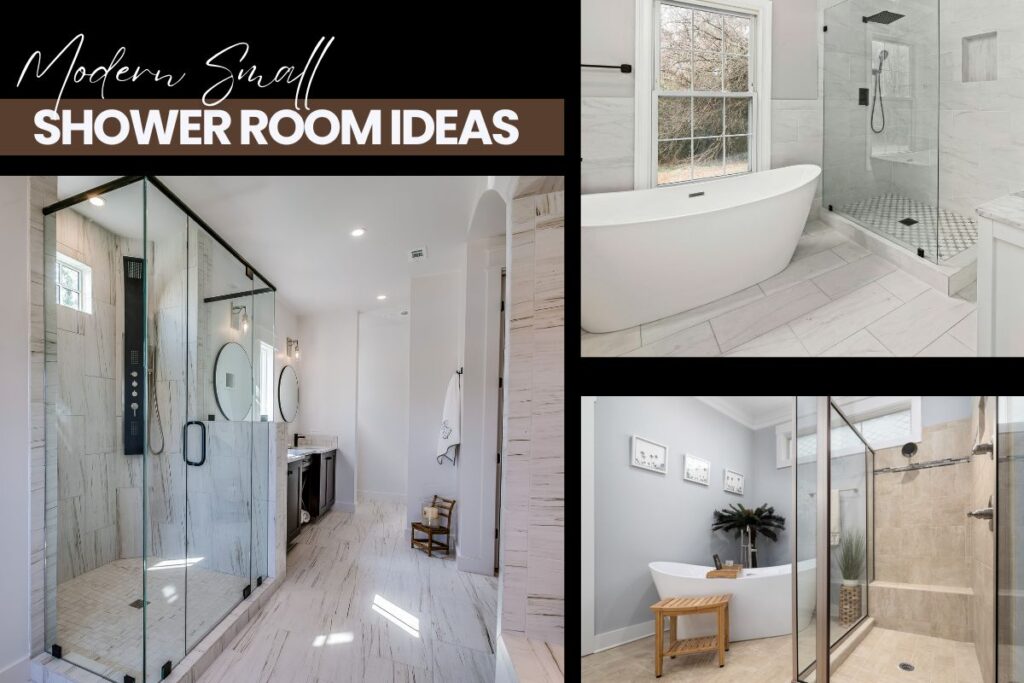
Let’s be honest. Most “small” bathrooms in the UK are a bit of a joke. You’re usually squeezed into a space that was probably a broom cupboard in a Victorian terrace or a weird corner of a flat that the developer couldn’t figure out what to do with. You go in there, hit your elbow on the sink, and wonder if a proper shower is even possible. But here’s the thing.
You don’t actually need a massive room to have a decent shower. You just need to stop thinking about bathrooms in the old-fashioned way. The latest small shower room ideas for 2026 are all about getting rid of the bulk and being a bit clever with the layout.
Get Rid of the Clunky Box
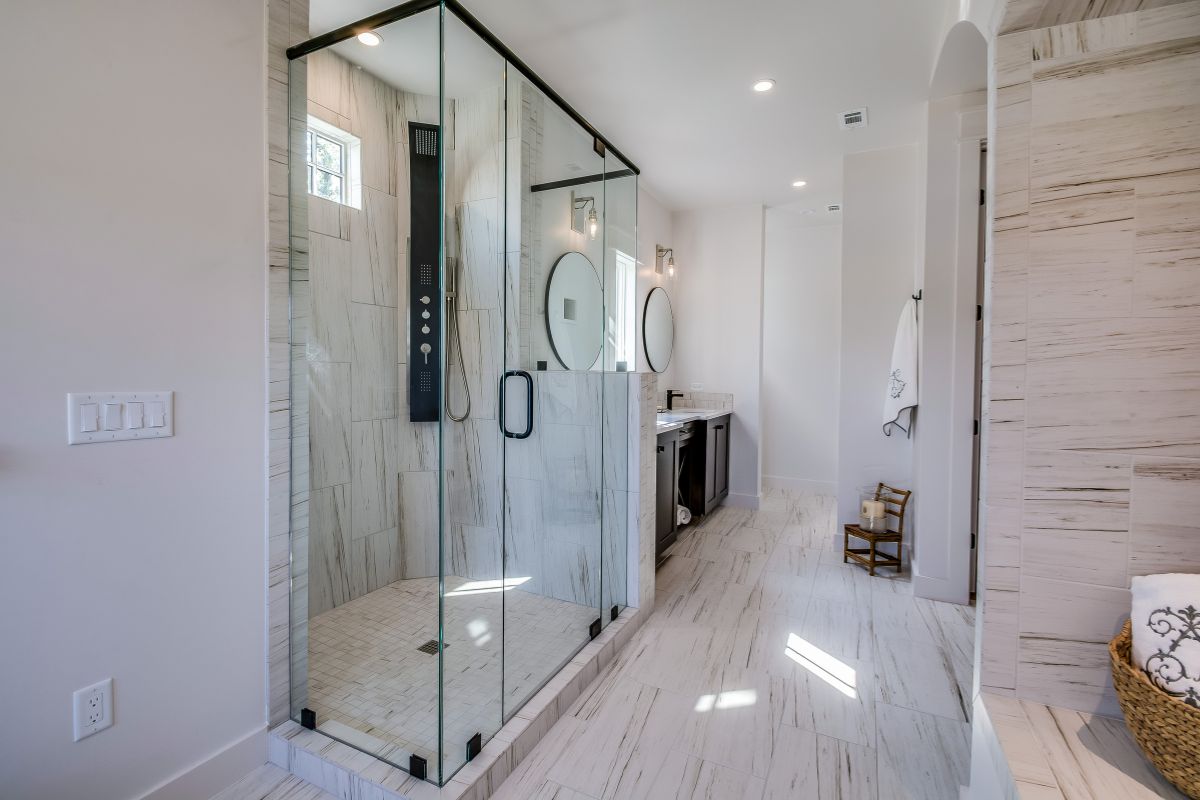
The biggest mistake people make in a small space is putting in a standard shower cubicle with a big, thick frame and a swinging door. It’s like putting a cage inside a closet. It just eats up space. Instead, the trend right now is to go for a “wet room” style or at least a very minimalist walk-in.
By using a single, clear glass panel and a low-profile tray—we’re talking something almost flush with the floor—you keep the sightlines open. When your eyes can see the floor running all the way to the back wall, the brain thinks the room is bigger. It’s a simple trick.
Ideal Home actually suggests that losing the door can make even a tiny en-suite feel twice as big because you aren’t fighting with a glass slab every time you want to get to the loo.
Also read: Why Some Homeowners Are Rethinking How They Use Their Gardens
Stop Using Tiny Tiles
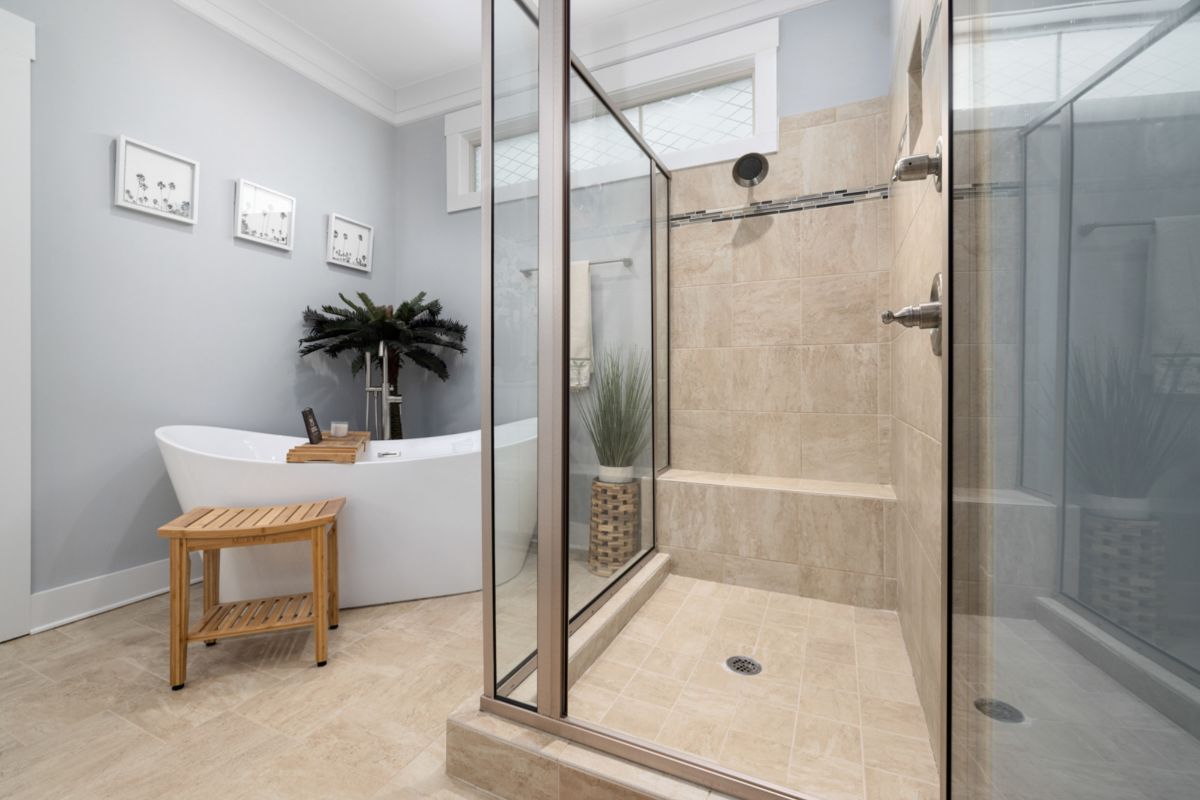
It sounds a bit weird, but big tiles are your best friend in a small room. Everyone thinks they should use little mosaics because the room is small. Wrong. Little tiles mean a million grout lines. And grout lines are basically a grid that tells your brain exactly how small the space is. It looks busy. It looks cluttered.
If you use massive tiles—like those 60x120cm ones—you’ll only have a few lines on the whole wall. It makes the surfaces look like one solid piece. People are getting away from that “hospital white” look right now. We are noticing plenty of warm “greige” (that would be grey-beige, if you’re taking notes) and soft sage greens.
These colours have a bit of life in them, but they still keep things bright. If you want to go really modern, look at micro-cement. It’s a waterproof coating that has zero joins. No grout to scrub. Ever. That’s the dream, isn’t it?
Make Everything Float
The most valuable asset you have is floor space. So if it is a floor-mounted toilet and you have a huge vanity unit on legs, the room is going to feel cramped. You are supposed to keep everything off the deck. Go with wall-mounted toilets and “floating” basins.
The room looks so much larger when you can see the floor tiles that were underneath the toilet. Plus, it’s way easier to mop. For storage, don’t buy a massive cabinet. Use the wall. Build a little niche—a recessed shelf—into the shower wall itself. It’s perfect for your shampoo bottles, and it doesn’t poke out and hit you in the shoulder while you’re washing.
Also read: The AR-ready Showroom: Top 3D Furniture Rendering Services For Augmented Reality
Lighting and Mirrors: Don’t Skimp
A dark shower room is always going to feel like a cave. And not a cool, spa-like cave. Just a dingy one. You need proper lighting. Don’t just stick one light in the middle of the ceiling and call it a day. Use a couple of spotlights and maybe a back-lit mirror.
Speaking of mirrors, go as big as you can. A mirror that takes up half a wall will literally double the size of the room in your eyes. It’s a well-known trick because it actually works. House Beautiful mentions that mirrored cabinets are a fantastic choice because they hide all your toothbrushes and clutter while making the room feel bright.
Also read: The Hidden History Of Beds: From Straw Mats To Smart Designs
Quick Fire Tips for a Small Shower Room
In case you are in the midst of planning now, here’s a quick checklist which will allow you to save time, money and space:
- Use a slider or pocket door: If you need a keeper on the room for whatever reason, don’t allow it to swing inside. Opt for something functional like a pocket door that disappears into the wall, and you free up close to one square metre of usable space.
- Comfort-height, short-projection toilet: Specifically designed for small British bathrooms. They sit closer to the wall, giving you a few extra inches of crucial legroom.
- Keep the floor tile pattern simple: If you are going to use busy, patterned tiles on the floor, keep the walls completely plain. If you overload a small area with too many patterns, it will give you a headache.
- The 400mm rule for basins: Avoid a standard sink. Find a “cloakroom basin” that protrudes only up to 400mm from the wall. You’ll still have plenty of room to wash your hands without it blocking the path.
- Install a continuous extractor switch: Wire your extractor fan to turn on automatically with the light, but set it to run for at least 15 minutes after the light goes off. This is the only way to beat steam in a room with no windows.
- Use a single, vertical tile layout: If you’re using rectangular tiles on the walls, lay them vertically instead of horizontally. It draws the eye upwards and makes the ceiling feel higher than it actually is.
FAQ’s
Q. Can I actually fit a shower in a 1-metre-wide room?
A. Yeah, you can. You’ll probably want a walk-in at one end. A 700mm or 800mm wide tray is tight, but it works if the rest of the room is kept clear.
Q. What’s the deal with black taps?
A. They look great. Matt black or brushed brass is everywhere in 2026. They add a bit of “punch” to a room that might otherwise look a bit bland. Just keep an eye on limescale if you live in a hard-water area.
Q. Is a wet room expensive?
A. It can be. You’ve got to make sure the floor is properly “tanked” (waterproofed). If you don’t, you’ll end up with a damp living room ceiling. But in a small room, the cost isn’t too bad because there’s less floor to cover.
Q. How do I stop the room from getting mouldy?
A. good extractor fan. Seriously. Don’t buy a cheap one. Get a powerful, quiet one that runs for a bit after you turn the light off. In a small space, steam builds up in seconds.
The Verdict
Small shower rooms need not be a nightmare. You just have to be a little savage. Lose the big units, use large tiles/slabs, and leave as much free floor space as possible between furniture. You want to make the space work for you; you do not want it working against you.
And honestly? When you’ve got a spacious walk-in shower with an enormous rain head and half-decent lighting, you won’t even care that you can’t swing a cat in there. You will be way too busy relishing in the fact that your bathroom no longer feels like a cupboard!
If that gives you some ideas in progressing down the route of doing a renovation, then well done! Just remember: keep it simple and get that toilet off the floor!
Sources and References
- Ideal Home: Comprehensive guide on modern layouts, fixed glass panels, and the latest minimalist shower trends.
- House Beautiful: Design Tips for Compact Shower Rooms — Professional advice on colour theory, mirrored cabinet storage, and space-saving solutions for small bathrooms.
- Real Homes: Bathroom Tile Ideas for Compact Spaces — Expert tips on selecting large format tiles, reducing grout lines, and incorporating warm neutral palettes.
- House Beautiful. Small Shower Room Ideas That Make Tiny Bathrooms Feel Bigger (March 2026).
- Good Housekeeping UK. Clever Small Shower Room Ideas for Compact Spaces (2026).
- Real Homes. Best Small Bathroom Shower Ideas and Design Tips (Updated 2026).
- Homes & Gardens. Small Shower Room Ideas to Steal for Your Home (2026).