Although the British property market has long played an outlier role in the international financial world, current movements have taken that definition to its extreme. As we approach the dreaded 2026, which seems to be like some fear-fuelled odometer click in a video game: frequently spoken of as the year when it is popularised that owners will have their mortgage treat extension status revoked, many first-time buyers and home movers (not rival party politicians) alike are left scratching their heads wondering why UK house prices likes seem determined not only to resist their usual instinct to drop much like during a power cut but instead continue posting healthy growth?
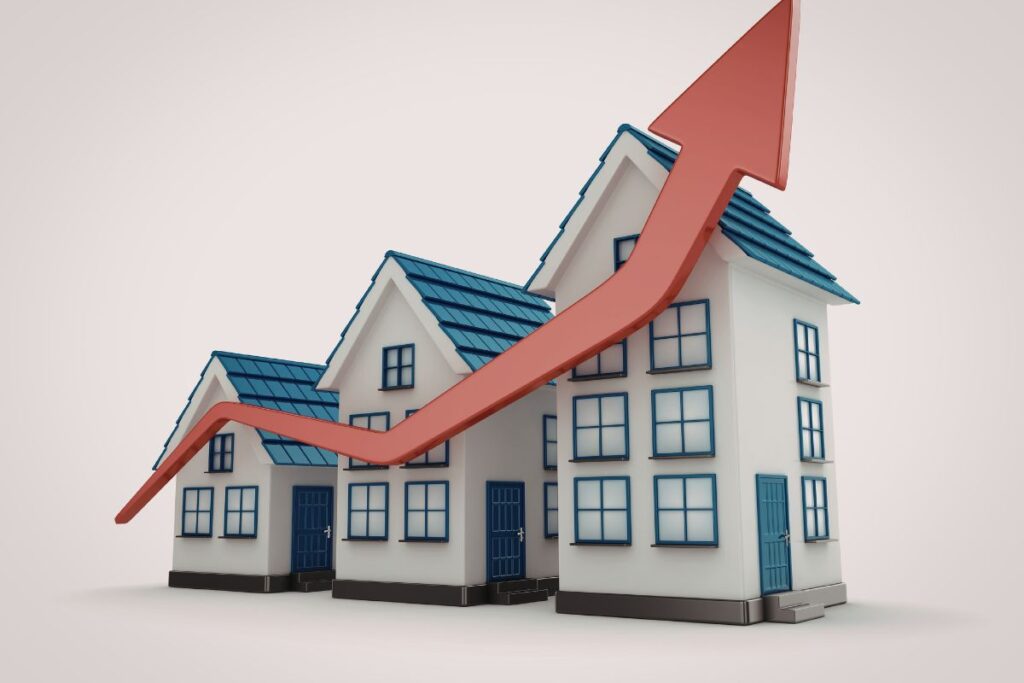
To comprehend this phenomenon, we study why UK House Prices Are Rising Despite Crisis, we also need to go beyond news headlines about conflict and record energy prices. The UK house market is gathering pace, according to figures out today from the country’s biggest building society, Nationwide. We were shocked to learn just last month of a 3% YoY leap in property values for April, with the typical home costing around £278,880. This comes against the backdrop of a continuously destabilising global oil market, primarily due to the impact of the ever-present Middle East conflict – often referred to in general terms as the “Iran-Israel crisis” – on world crude prices, leading to dampened consumer spirits.
The Paradox of Resilience
Seeing growth in such an environment appears counter-beneficial at its core. Usually, when energy prices rise and inflation persists, it is the housing market that cools first as discretionary spending disappears. However, data indicate otherwise. The strange quest for stable houses among UK households will answer your question, “Why UK House Prices Are Rising Despite Crisis”
One major reason as to Why UK House Prices Are Rising Despite Crisis is the relative resilience of household balance sheets. Enter the homeowner cohort, who are more accurately and heavily capitalised than they ever were before, unlike their experience in the 2008 financial crash, when many a homeowner was woefully over-leveraged. Based on aggregate household debt as a percentage of household income, it has been the lowest since 2004. This is due to extended transit times due to the low unemployment of labour and other materials.
Breaking Down the Affordability Factor
Mortgage rates have undoubtedly risen above the low-water marks seen in recent history, but they appear to have relaxed into a new operating range. The shock that assailed the market in 2023 has morphed into a reasonably predictable, albeit costlier, outcome. Indeed, this stabilisation itself is why UK house prices are climbing despite the crisis. Buyers who were sitting on the sidelines waiting for rates to fall have accepted that the “new normal” is here to stay.
Additionally, pay increases have finally started to exceed the rate of inflation. Back then, an increase in real-term income has increased the borrowing power of the average worker, which has provided a stable floor on property valuations. So while the reasons as to why UK house prices are soaring in a time of crisis can be analysed, we cannot miss the fact people, on balance, have more cash in their pockets than they had eighteen months ago, even when bread and fuel remain expensive.
The Supply & Demand Theorem
The enduring, structural under-supply of housing continues to be the most consistent explanation for why house prices have continued to rise despite the crisis in this magazine. The UK has consistently failed to build as many homes as it needs for decades. This shortage induces fierce competition among organisations since even the slightest reduction in demand is countered by an absolute dearth of inventory.
| Metric | March 2026 | April 2026 |
|---|---|---|
| Average House Price | £277,770 | £278,880 |
| Annual Growth Rate | +2.2% | +3.0% |
| Mortgage Approvals | 62,700 | 63,500 |
Mortgage approvals are, as noted in the table above, actually rising. It shows that interest in homeownership is not only alive but well. The desire to have your own land in a tiny, overcrowded island economy continues to be the strongest economic lever for Britain.
Q: To what extent is it, after all, a geopolitical bloc that you are dealing with behind the scenes? Was your reaction delayed?
What you do have is ongoing tensions in the Middle East that made for some volatility. Several large lenders pulled mortgage products from the market in early April, and five-year rates have been above 5% since April 2023, with an average two-year fixed rate of 5.79%. At this point, you might expect the price to fall. But in the UK to reverse very often it is a case of timing why he enters prices are rising at home class crisis Middle East.
Most of the deals completed in spring 2026 had been reached months prior, ahead of the most recent escalations. And there is a psychological factor in play — real estate has always been seen as a “haven” asset in times of global chaos. Investors and families are moving their capital away from volatile stocks and into the literal “bricks and mortar” of British soil.
The ‘Search for Value’ and the Regional Shifts
Understanding why UK house prices are rising despite the crisis, it is not a uniform thing. While the North West and Northern Ireland have enjoyed even bigger increases, London’s performance off the price level of two years ago was more subdued – being primarily driven by a rebalancing between its falling top-end market and a buoyant mainstream one.
This rise in the region is fundamentally propelled by a change in buyer patterns. Hybrid work is a permanent feature of the UK professional make-up, leaving buyers no longer tied to extortionate London postcode prices. They are moving where the homes cost less and bringing their London wages to those markets, pushing them up. This “levelling up” of property values through internal migration is a major reason homes in the UK are climbing despite the crisis.
Legislative Changes: The Renters’ Rights Act
A third, hitting closer to the heart of top rate rent rises for whom and in which constituencies, is the unanticipated passage of the Renters’ Rights Act. New protections for tenants, including the no-fault evictions ban, came into force law on 1 May 2026. Although this is a win for renters, it has led to some private landlords wanting out of the market.
A landlord, when selling a rental property, often sells to an owner-occupier. That change results in a tighter rental stock supply and greater strain on the sales market at the same time. And the ever-connected spread of homes helps maintain a shrinking pool; this churn in the market is simply another reason UK house prices are increasing in spite of the crisis.
Looking Toward the Future
The crisis in UK housing is still far from over — as we enter the second half of 2026, it could yet be the dominant conversation in financial circles about any comment on why house prices are up. Nationwide’s chief economist, Robert Gardner, believes the market is currently underpinned by “needs-based” buyers, but warned that the future of housing will ultimately depend on decisions made by the Bank of England over interest rates.
We could see further price jumps if inflation remains cool. Yet should the energy crisis continue to spiral, we are really going to see what mettle a British homeowner has been made of. The reason the UK house prices keep rising amid the crisis is easy for now: a mixture of good jobs, wage growth and an awful lack of supply has created a “perfect storm” meaning higher prices.
This was one more bit of evidence, if it needed any, that the UK housing market remains a lot more resilient than some have dared suggest. In an inherently uncertain world, a British home remains one of the few certainties – even in the face of global disarray and domestic economic angst. If you are holding out for a big market sale, the current data indicates the wait may be a very long one. There may be a “crisis”, but the hunger for a home is stronger.