The Andy Burnham home EV VAT change removed the 5% VAT on domestic electricity from 1 October 2026, cutting the rate to 0%. Home charging now carries no VAT at all, saving a typical EV owner £20–£25 a year, while higher-mileage drivers save nearer £40.
Charging an electric car on your driveway has become one of the cheapest ways to get around Britain. It was the prime minister’s second-day decision in office and a win for anyone with a plug and a parking space.
- Domestic electricity VAT fell from 5% to 0% on 1 October 2026 in Great Britain. Northern Ireland stays at 5%.
- The Treasury expects it to cut the annual Ofgem price cap by around £45.
- Off-peak home charging costs about 7p per kWh, or roughly 2p a mile.
- Public charging still carries 20% VAT, a £200 annual gap.
- The relief now runs to July 2027.
- Solar, batteries and heat pumps will lose their 0% VAT rate from 1 April 2027.
What Actually Changed on 1 October
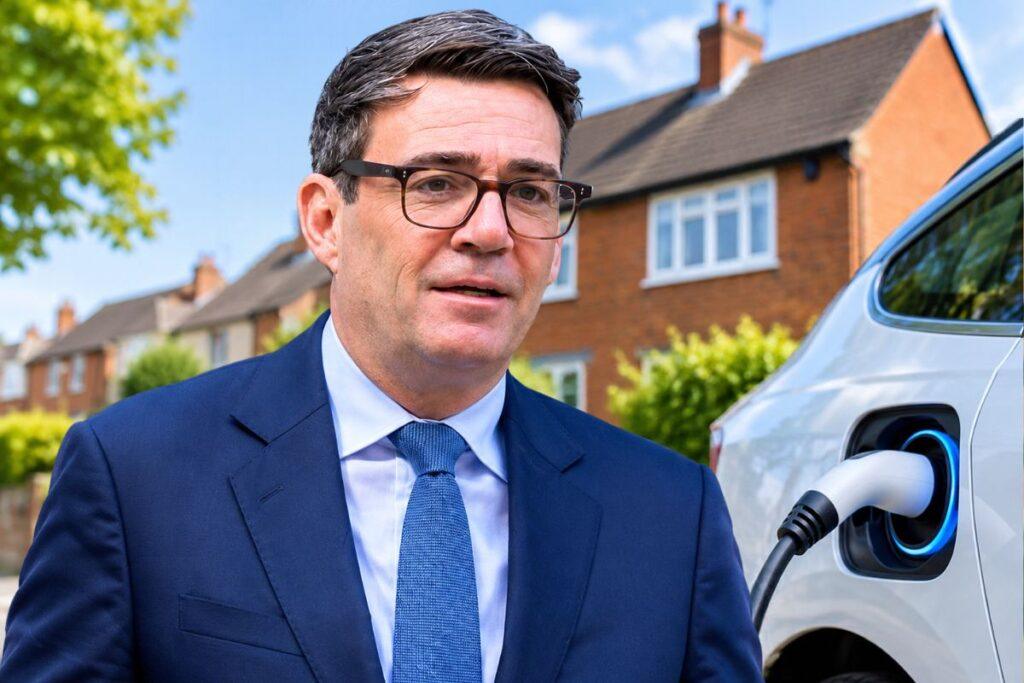
The measure arrived within 48 hours of Andy Burnham entering Downing Street. A Treasury statement on GOV.UK confirmed that it is funded by scrapping the £1.8 billion Digital ID programme, at a cost of around £850 million in 2026-27.
The Prime Minister framed it as breathing space rather than a motoring policy.
“Westminster has not been working for people for too long, with families struggling with the cost of living,” he said. “That needs to change. I said I wanted to give people breathing space, and that’s what I’m announcing on my second day as prime minister.”
It landed with the new Ofgem price cap, so the saving showed up straight away.
How Much Can EV Owners Save?
The sums are modest but real. David Martell, chief executive of charger firm Andersen EV, puts the average saving at £20–£25 a year, rising to £35–£40 for high-mileage drivers.
Carwow’s analysis shows the impact in another way. With the summer cap at 26.11p per kWh, losing the VAT saves £1.24 on a full 100kWh charge — about £65 a year for weekly top-ups.
Michael Golson, motoring expert at Cazoo, told the Express the policy works on the mind as much as the wallet:
“The Prime Minister’s driveway discount sends the right signal to drivers considering the leap to electric. Even if it saves them just £20 a year, cutting domestic electricity VAT boosts the appeal of an electric vehicle – further chipping away at the day-to-day running costs associated with switching from petrol or diesel. While it might sound modest, small financial nudges like this carry real psychological weight for buyers on the fence.”
Matt Galvin, managing director of Polestar UK, said, “Extending the VAT cut on household electricity is good news for drivers who can charge at home, keeping costs to around 7p a mile on a standard tariff and as little as 2.3p off-peak.”
Who Gets the Benefit, and Who Misses Out
ZapMap figures suggest 67.2% of UK homes have a driveway or dedicated parking space nearby, around 19 million households able to use the cheaper rate.
Research by the Open Road Partnership, shared with the Express, mapped where off-street parking is most common. The Prime Minister’s Own Makerfield constituency topped the list at 86.9%, followed by Rawmarsh and Conisbrough, Rotherham and St Helens North on 85.9%, and then Alyn and Deeside on 85.7%.
Even there, more than one home in ten has no driveway. Robert Forrester, chief executive of Vertu Motors, warned: “People’s ability to switch to electric vehicles varies hugely across the country, with millions still facing very real barriers around affordability, charging and access.”
The Driveway Divide Now Costs £200 a Year
Here is the sting. Home electricity is zero-rated, but public charging still carries 20% VAT. ChargeUK calculates the VAT difference alone to be worth £200 a year, with home chargers paying over £1,000 less annually than public-only drivers.
Per unit the gap is stark: about 7p per kWh off-peak at home against 54p at a public standard charger and 77p at a rapid.
Shane Brennan, ChargeUK’s chief executive, welcomed the cut but flagged the side effect: “Cutting VAT on home electricity is the right call at the right time, it will relieve some pressure on what will be a tough winter for energy consumers, including EV drivers. However, it will also entrench the driveway divide for those current and want-to-be EV drivers who pay the full 20 per cent VAT to charge their cars at the worst moment.”
Vicky Edmonds of EVA England says the fix is simple: “The government must take urgent action to close that charging divide, and reducing VAT on public charging would be a simple and visible first step towards doing so.”
Nine to ten million households have no off-street parking. Cross-pavement gully rules have been eased, but local permission is still needed.
What the Autumn Budget Settled
John Healey delivered his first budget on 28 October 2026. For home chargers, it was welcome news. The relief, originally due to end on 31 March 2027, now runs to July 2027, with the Chancellor saying it takes £50 off the annual price cap.
For public charging, it went the other way. Birmingham Mail reported that the government is legislating to hold public and workplace charging at 20%, effective from 1 November 2026. That shuts down a first-tier tribunal ruling earlier in 2026, brought by Charge My Street against HMRC, which found no legal basis for charging 20% in public while homes paid 5%.
Alongside it came a £100 million fund, spread over two years from spring 2027, to cut the cost of local, lower-powered chargers, plus a taskforce on “tariff porting” so drivers could take home tariffs to public units. On-street users could save about £150 a year.
Electrifying noted the wider package: the 5p fuel duty cut deferred to July 2027, a £100 one-off winter payment for council tax bands A to D, and plans to scrap standing charges. Worth diarising too: solar, batteries and heat pumps will move from 0% to 5% VAT on 1 April 2027.
What Drivers Want Next
A survey of more than 1,000 drivers, reported by LeedsLive, found 28% wanted the pay-per-mile EV tax delayed or dropped, ahead of the fuel duty freeze on 26%. On the VAT gap, 62% wanted the two rates equalised.
Adam Wood, managing director of Renault UK, summed up the mood: “In those difficult choices, a clear differential between home and public charging is now 20 per cent. That’s something that the government should consider when looking at cost.”
From April 2028, EV drivers face a 3p per-mile eVED charge and 1.5p for plug-in hybrids. At 7,000 miles a year, that is £210. For now, the driveway remains the cheapest forecourt in Britain.
FAQs
Q. When did the Andy Burnham home EV VAT cut start?
A. It began on 1 October 2026, taking domestic electricity VAT from 5% to 0%. It applies in Great Britain only.
Q. How much does the VAT cut save EV drivers?
A. Typical home chargers save £20–£25 a year, and high-mileage drivers £35–£40. Heavy weekly charging can reach about £65.
Q. Does the VAT cut apply to public EV chargers?
A. No. Public and workplace charging stays at 20% VAT from 1 November 2026. Only home electricity is zero-rated.
Q. How long will the 0% VAT rate last?
A. It was first due to end on 31 March 2027. The Autumn Budget pushed that to July 2027, covering two winters.
Q. What is the EV driveway divide?
A. It is the cost gap between home and public charging. The VAT element alone is £200 a year, with total costs over £1,000 apart.
Q. Will my electricity bill definitely fall?
A. Not automatically. Suppliers must pass the cut on, including on fixed tariffs, but price cap rises can offset it.
Sources & References:
- GOV.UK – It is funded by scrapping the £1.8 billion Digital ID programme, at a cost of around £850 million in 2026-27.
- Express – Michael Golson, motoring expert at Cazoo, told the policy works on the mind as much as the wallet.
- Electrifying – The 5p fuel duty cut is deferred to July 2027, a £100 one-off winter payment for council tax bands A to D, and plans to scrap standing charges.
- Birmingham Mail – The government is legislating to hold public and workplace charging at 20%, effective from 1 November 2026