
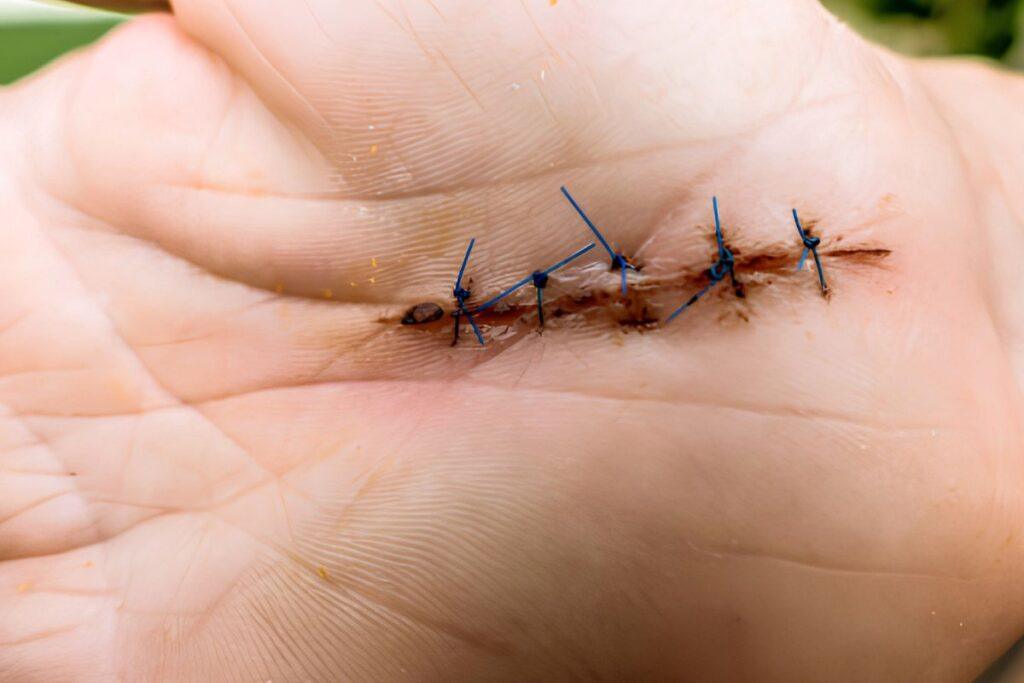
Dissolvable stitches typically take 10 days to 6 months to fully dissolve, depending on the type of material used and the wound location. Most surface-level stitches dissolve within 1–2 weeks, while those placed in deeper tissue or after major surgery can take up to 6 months. You do not need to visit a doctor to have them removed — the body breaks them down on its own.
How Long Do Different Types of Dissolvable Stitches Take to Dissolve?
The exact time depends on the material the stitches are made from. Surgeons choose different types based on the wound’s depth, location, and expected healing time.
| Stitch Type | Material | Typical Dissolve Time | Common Use |
|---|---|---|---|
| Vicryl (Polyglactin) | Synthetic polymer | 56–70 days | General surgery, skin closure |
| Monocryl (Poliglecaprone) | Synthetic polymer | 91–119 days | C-sections, plastic surgery |
| PDS (Polydioxanone) | Synthetic polymer | 4–6 months | Deep tissue, orthopaedic |
| Chromic Gut | Treated animal collagen | 10–21 days | Dental, oral wounds |
| Plain Gut | Natural collagen | 7–10 days | Minor skin wounds |
| Vicryl Rapide | Synthetic (fast-absorbing) | 10–14 days | Facial wounds, children |
KEY POINTS
- How long dissolvable stitches take to dissolve depends on the material they are made from and where they are in the body.
- Most dissolve somewhere between ten days and six months
- The body breaks them down naturally without any need for removal
- Keeping the wound clean and dry is the most important thing you can do while they heal
- Signs of infection need prompt medical attention
How Do Dissolvable Stitches Work Inside the Body?
Many people wonder what actually happens to these stitches — do they melt away, or does something more complex happen?
Dissolvable stitches are made from either natural materials (such as processed animal collagen) or synthetic polymers (such as polyglycolic acid or polylactic acid). The body breaks these materials down through two different processes:
Hydrolysis — Water molecules in the body gradually weaken the chemical bonds in synthetic stitches, causing them to break apart slowly. This is a predictable, controlled process, which is why synthetic stitches have more reliable dissolve timelines.
Enzymatic breakdown — Natural material stitches (like plain gut or chromic gut) are broken down by the body’s own enzymes. Because this involves the immune system, the timeline can vary more between individuals.
Once broken down, the body simply absorbs the leftover material as harmless waste. No residue is left behind, and no removal procedure is needed.
Also read: UK Health Guide 2026: Symptoms, Recovery Times & NHS Advice
What Dissolvable Stitches Actually Are
Dissolvable stitches, also called absorbable sutures, use materials that your body quietly breaks down by itself over time. Either natural animal proteins or synthetic polymers, both of which your immune system handles without any help from you. No follow-up visit needed, no removal appointment. They disappear on their own.
Standard stitches are a different matter entirely. Nylon and silk can’t be absorbed, so a doctor or nurse has to physically pull them out once the wound closes.
How Quickly Do Dissolvable Stitches Dissolve?
Nobody gives a straight answer here because the truth is that it genuinely varies.
Wisdom tooth removal or a small skin wound – stitches are usually gone within a week or two. After a caesarean, six weeks is roughly what most women find. Deeper procedures involving joints, bone or thick tissue layers are a different situation entirely. Those stitches can be built to last several months because the body needs that support to properly rebuild.
The surgeon chose the specific material based on your wound’s requirements. Worth asking at your next appointment if you’re not sure what you’ve got or when to expect them to be gone.
Also read: How Long Does It Take for Plastic to Decompose? The Truth
How Long Do Dissolvable Stitches Take by Procedure Type?
Different surgical procedures use different stitch materials, which is why healing timelines vary widely from person to person.
After a Caesarean Section (C-Section)
Dissolvable stitches used after a C-section are typically placed in multiple layers — deep tissue, muscle, and skin. The inner layers use longer-lasting materials and can take up to 6 weeks to fully dissolve. According to Cambridge University Hospitals NHS Trust, patients are advised to avoid strenuous exercise and swimming until the wound is completely healed at approximately 6 weeks.
After Dental Surgery or Tooth Extraction
Oral stitches are exposed to saliva and moisture constantly, which speeds up the dissolving process. Most dental dissolvable stitches break down within 7 to 10 days. Some may loosen and fall out slightly earlier — this is completely normal.
After Tonsil Removal (Tonsillectomy)
Stitches in the throat area are made of fast-dissolving material and usually dissolve within 7 to 14 days. Patients may notice white patches in the throat during healing — this is a normal part of the process.
After Episiotomy or Perineal Tear (Childbirth)
Stitches in this area are designed to dissolve within 2 to 4 weeks. According to the NHS, the discomfort typically eases within a few days, though full healing may take several weeks.
After General Surgery or Deep Wound Closure
Internal stitches placed in muscle or deeper tissue layers take much longer — often 2 to 6 months. These stitches need to hold the tissue together long enough for strong healing to occur before they break down.
After Minor Skin Wounds or Cuts
Fast-dissolving stitches on the skin surface (such as Vicryl Rapide) typically begin to dissolve within a week and are fully gone within 10 to 14 days.
Where are Dissolvable Stitches Commonly Used?
Surgeons reach for dissolvable stitches on deeper wounds rather than surface cuts. They sit better within the incision, put less tension on surrounding tissue, and generally produce less scarring.
Common places you’d find them: wisdom tooth extractions, caesarean deliveries, vaginal and perineal repairs after childbirth, abdominal surgery, skin grafts, muscle and connective tissue work.
Straightforward cuts near the surface usually get non-absorbable stitches instead – they’re more robust and easier to monitor. Dissolvable ones earn their place when wounds are buried deep, hard to access, or need a closing layer-by-layer.
Also read: Why Lyme Disease Cases are Suddenly Rising Across the UK Now
How to Look After Dissolvable Stitches at Home?
Clean and dry. That’s your job. Your doctor will walk you through the specifics, but showering within 24 hours is usually fine for most people. Baths and swimming have to wait until things have properly sealed up.
Pat the area dry after getting it wet; don’t rub it. Leave soap off the wound itself unless told otherwise. Swap dressings when instructed. Loose clothing around the site stops anything rubbing while healing happens underneath.
Every single time before you touch the wound or swap a dressing, wash your hands. Sounds obvious, but it genuinely cuts infection risk in a way nothing else does.
Give the area a rest from strain, too. Stitches in your abdomen mean watching how you lift things. Stitches in your mouth mean thinking about what goes in there for the first few days.
Also read: The Dangers of Ignoring Acid Reflux and Why You Shouldn’t Delay Treatment
Signs Something Might Be Wrong
Usually, they heal up without any fuss at all. Still, some things are worth keeping an eye on.
Redness spreading around the wound, swelling, warmth, and pain that’s climbing rather than settling – all worth noting. Discharge, a smell you can’t explain, a temperature, swollen glands, feeling rough all over – any combination of those means calling your GP or NHS 111 the same day. Infected wounds move fast. Cellulitis is unpleasant. Sepsis is rare, but it happens.
Stitches that tear loose before healing is done need the same-day attention. Don’t sit on it. The wound very likely needs re-closing.
Can You Remove Dissolvable Stitches Yourself?
Don’t. Seriously, there’s nothing to gain and plenty to lose. Pulling at them yourself pushes bacteria into an open wound and risks tearing it apart before it’s had a chance to close. If one end is sticking out and irritating you, phone your GP rather than grabbing tweezers. Occasionally a doctor will trim something that’s lingering too long, but that’s their call.
These stitches were designed to handle themselves. Clean the area, follow what you were told, and get out of the way.
Sources and References
- Medical News Today – Dissolvable Stitches: How Long They Last
- Health Direct – Caring for Your Sutures:
- Cambridge University Hospitals NHS – Caesarean Section Wound Care
- NHS 111 – Wound Care and Stitches
- Medical News Today – Wound Infection Signs